Commercial Bakery Equipment List - Complete Setup Guide
Who this is forThis guide is for bakery owners and cafe operators planning or expanding a commercial bakery and choosing production equipment.
A commercial bakery is built around three core machines: an oven to bake, a spiral mixer for bread dough, and a planetary mixer for batters, creams and fillings. Everything else supports these three. The oven configuration sets your baking capacity, the spiral mixer sets your bread output, and proofing, refrigeration and prep surfaces decide how consistent the finished product is. Size these to the largest batch you regularly produce, not the average, because a bakery that outgrows its mixer or oven in six months has to buy twice. This guide lists the full equipment set with capacity guidance.
Key facts
- A commercial bakery is built around three core machines: an oven for baking, a spiral mixer for bread dough and a planetary mixer for batters and creams.
- Deck ovens come in single, two and three deck configurations, and the number of decks sets the baking capacity.
- Spiral mixers are sized by dough capacity, typically from 20 to 200 litres, and should be chosen for the largest batch you regularly produce.
- Proofing, refrigeration and stainless steel prep surfaces are essential support equipment that decide the quality and consistency of the finished product.
The oven: the heart of the bakery
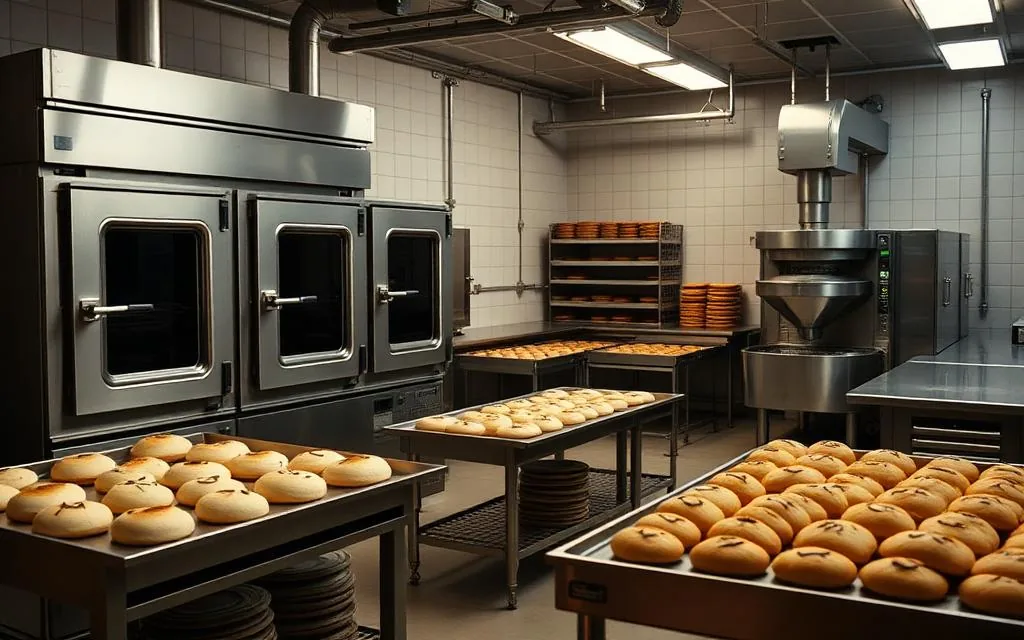
The oven defines what and how much you can bake. Deck ovens are the standard for artisan bread and many pastries because they bake with steady, radiant bottom heat and often include steam injection for crust. They come in single, two and three deck configurations, and the number of decks directly sets your capacity. Convection ovens suit cookies, viennoiserie and even batch baking where fan-forced heat gives an even bake.
Choosing deck count
A single-deck oven suits a small cafe bakery or a startup. A two-deck oven doubles output and lets you bake different products at different temperatures at once. A three-deck oven suits a production bakery supplying multiple outlets. Choose the deck count for your target daily output, and leave headroom for growth because oven capacity is the hardest thing to add later.
Mixers: spiral and planetary
Bread dough and cake batter need different mixers, and a serious bakery needs both. A spiral mixer kneads bread dough gently and thoroughly without overheating it, which is essential for good gluten development. A planetary mixer whips, creams and beats batters, icings and lighter mixes with interchangeable attachments.
- Spiral mixers, sized by dough capacity from roughly 20 to 200 litres, chosen for your largest regular bread batch.
- Planetary mixers, with whisk, paddle and hook attachments, for batters, creams and fillings.
- A dough divider or sheeter for consistent portioning at higher volumes.
- Weighing scales integrated into the prep flow for recipe accuracy.
Sizing the spiral mixer
Spiral mixer capacity is stated in dough or flour litres. Size it to the largest single batch you produce in a regular shift, not to your average, because running a mixer at maximum every cycle wears it out and running it half empty wastes energy and gives inconsistent kneading. A 20 to 40 litre mixer suits a small bakery, while a production bakery may need 120 litres or more.
Proofing and temperature control
Consistent proofing separates good bread from unpredictable bread. A proofing cabinet or retarder-prover controls temperature and humidity so dough rises the same way every time, regardless of the weather outside. Retarder-provers also let you hold dough overnight and bake fresh in the morning, which changes how a bakery schedules its day. For a bakery in a variable climate, proofing control is not a luxury, it is what makes output repeatable.
Refrigeration and cold storage
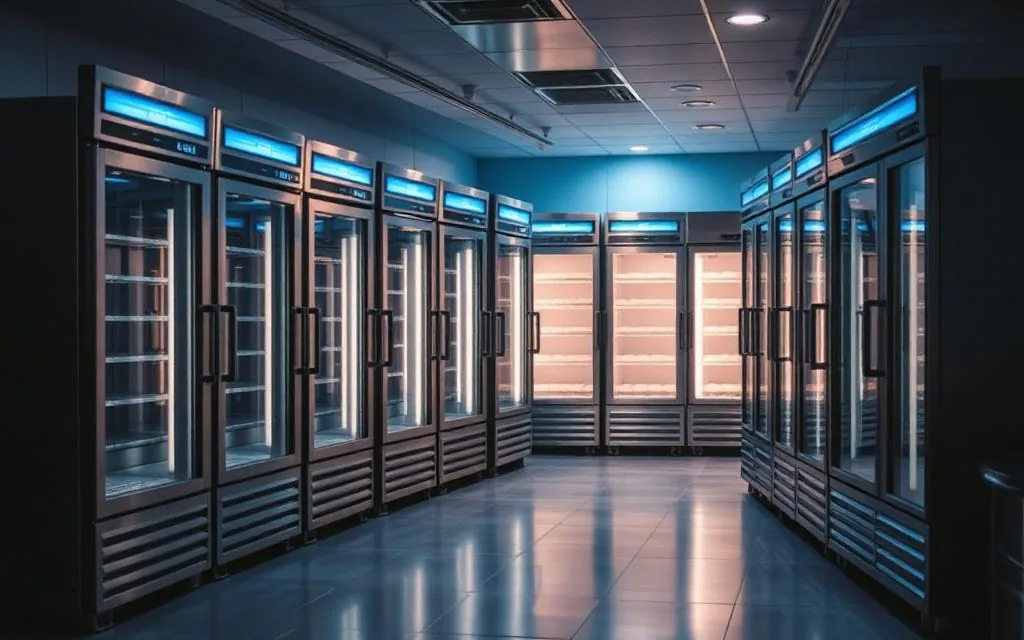
Bakeries need cold storage for butter, cream, dough and finished products, plus a blast chiller for setting mousses, cheesecakes and laminated dough. Under-counter refrigeration keeps ingredients at the prep bench, and a dedicated chiller for dairy and cream protects food safety. Cold storage also extends the working life of pre-portioned dough, which improves consistency across shifts.
Prep surfaces and display
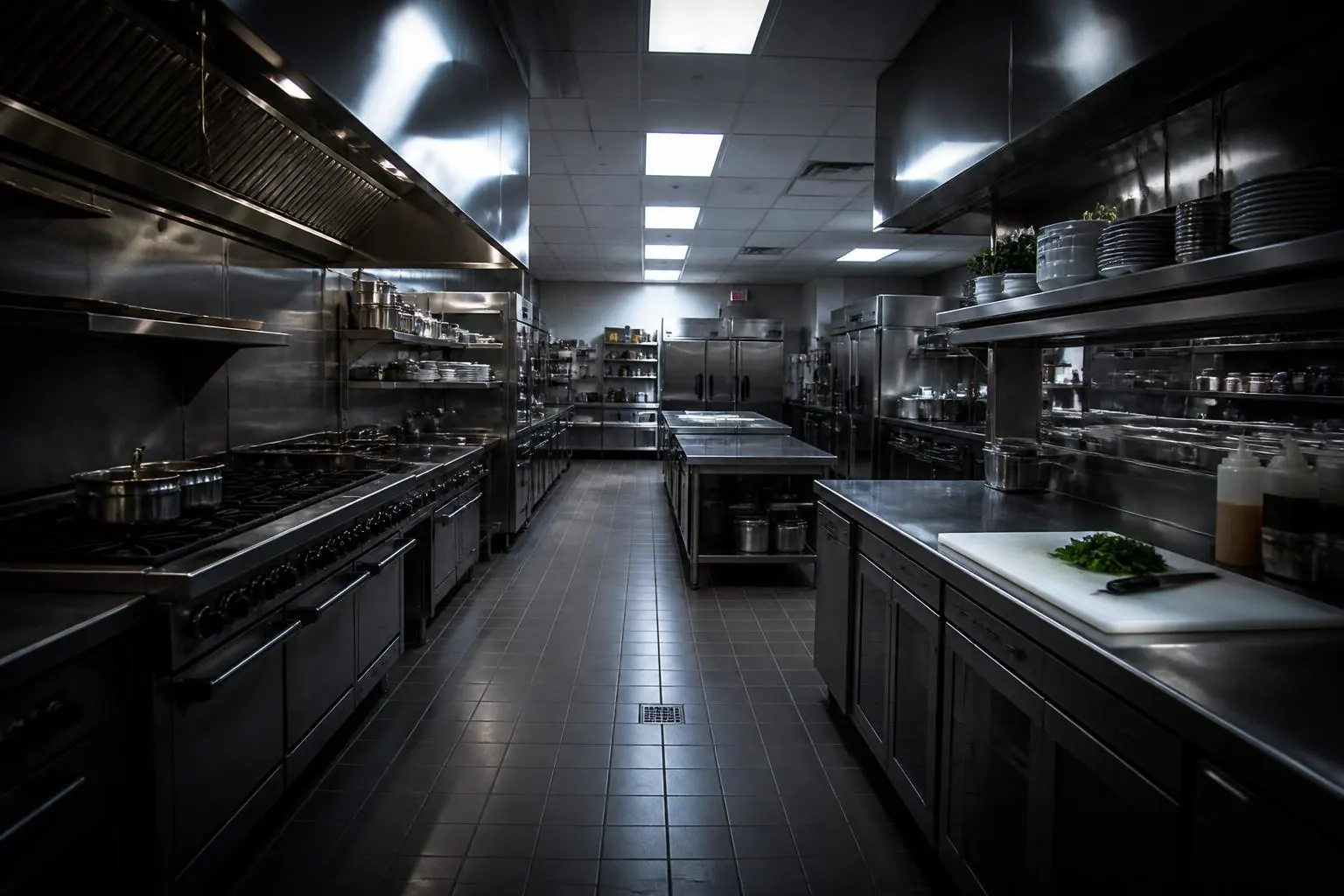
Baking needs generous, clean prep surfaces. Stainless steel work tables handle general prep, while marble or granite-topped tables suit chocolate and laminated dough because they stay cool. Display counters, refrigerated for cream products and ambient for bread, present the finished product to customers and hold it at the right condition. Sourcing bakery kitchen equipment in Bangalore from dedicated bakery equipment manufacturers in Bangalore lets these surfaces and counters be built to your exact production flow.
- Stainless steel work tables in grade 304 for general prep and portioning.
- Cool-topped tables for chocolate work and laminated dough.
- Refrigerated and ambient display counters for finished products.
- Speed racks and trolleys to move trays between mixing, proofing, baking and cooling.
Building a bakery that scales
The bakeries that last are the ones that size the oven and mixer for growth, control proofing for consistency, and build prep and display in durable grade 304 stainless steel. Start with the three core machines matched to your target output, add proofing and refrigeration to lock in consistency, and lay out the space so trays flow from mixing through proofing to baking and cooling without backtracking. Get the core right and the bakery produces the same quality every single day.
Looking at the equipment itself? See our range of commercial ovens and cooking equipment. Every unit is built through our in-house build process. For more on this, read our guide to commercial refrigeration for bakeries.
Come across a term you are not sure about? Our commercial kitchen equipment glossary explains 100+ terms in plain English.