Commercial Kitchen Exhaust Hood Guide - Types, Sizing and Installation
Who this is forThis guide is for restaurant and kitchen owners specifying an exhaust hood and ventilation system for a commercial cooking line.
A commercial kitchen exhaust hood must be sized to the cooking equipment beneath it, not to the size of the room, and its airflow is measured in cubic feet per minute, or CFM. The three main hood types are wall-mounted, island and proximity, and the right one depends on where the cooking line sits and how heavy the load is. Get the hood type, the CFM and the make-up air right, and the kitchen stays cool, clear of smoke and safe to work in. Get it wrong, and no amount of fans afterwards will fix a hot, smoky line. This guide covers the technical decisions that matter.
Key facts
- There are three main commercial hood types: wall-mounted for a line against a wall, island for a central cooking suite, and proximity for lighter cooking loads.
- Hood airflow is measured in CFM and must be matched to the type and intensity of the cooking equipment below it, not to the room size.
- Heavy cooking such as tandoors, charbroilers and deep frying needs far higher CFM than light griddle or steam cooking.
- Baffle filters trap grease and must be cleaned on a regular schedule, while the full duct needs periodic professional cleaning to prevent fire risk.
The three hood types and where each belongs
Hood type follows the position of the cooking line. Choosing the wrong type leaves grease and smoke escaping the capture area, which defeats the whole system.
Wall-mounted hoods
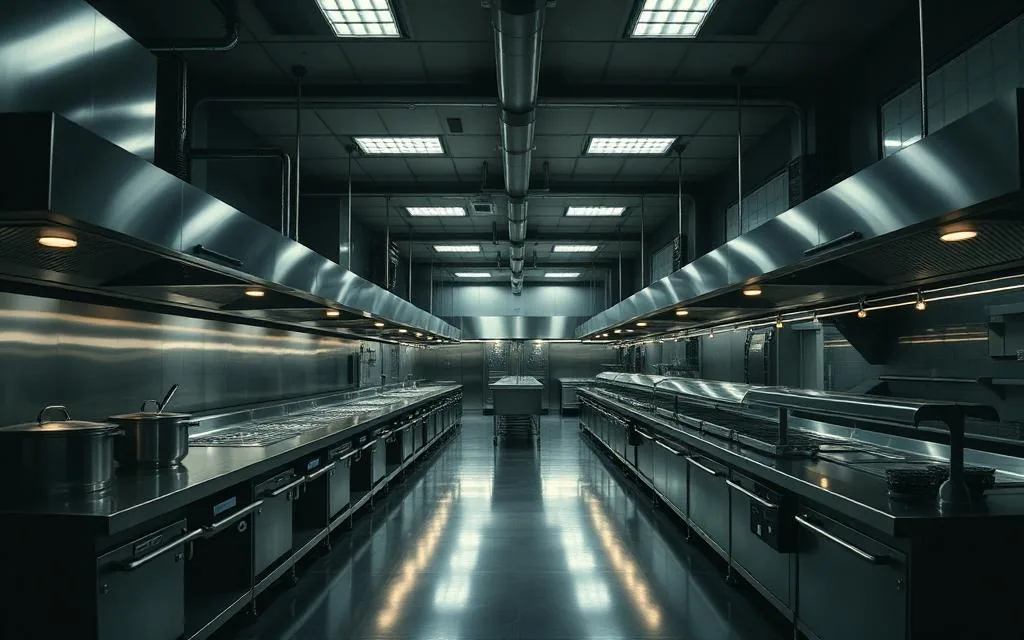
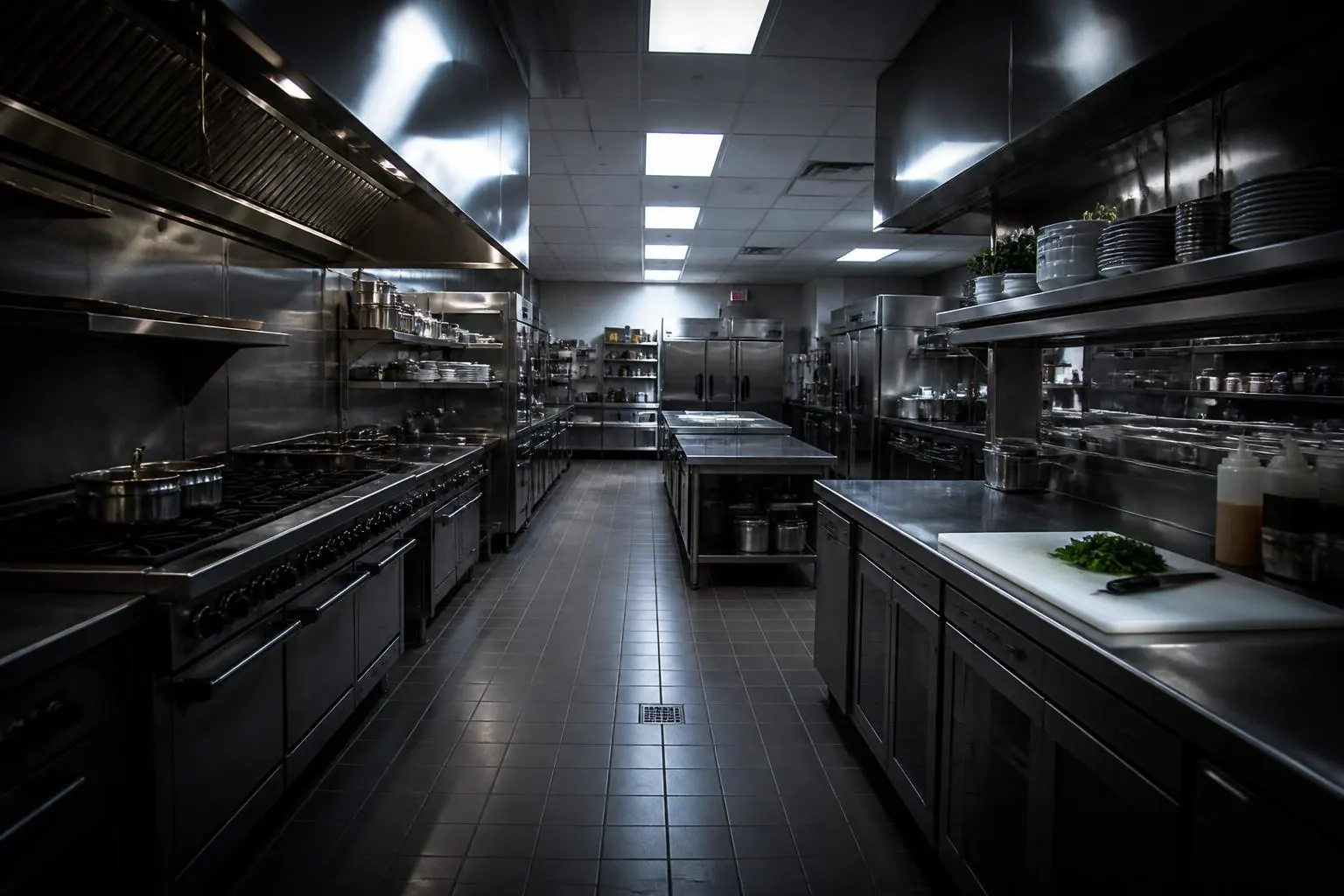
A wall-mounted canopy hood sits above a cooking line placed against a wall. It is the most common and most efficient arrangement because the wall helps contain the rising plume. Most Indian restaurant lines, with ranges, tandoors and fryers against a back wall, use this type.
Island hoods
An island hood hangs over a cooking suite placed in the centre of the kitchen with no wall behind it. Because the plume can drift on all four sides, an island hood needs a larger overhang and higher CFM than a wall hood covering the same equipment. Hotels and show kitchens often need this type.
Proximity and back-shelf hoods
A proximity or back-shelf hood sits low and close to lighter equipment such as griddles, ranges and pasta cookers. It captures effluent close to the source and suits compact kitchens with lighter cooking loads. It is not suitable above heavy charbroilers or solid-fuel tandoors.
Sizing the hood: overhang and CFM
A hood must physically overhang the cooking equipment on all exposed sides, typically by 150 to 300 millimetres, so the rising plume is captured before it spreads. Beyond the physical size, the exhaust fan must move enough air, measured in CFM, to carry the heat and grease away. CFM is driven by two things: the length of the cooking line and the intensity of the cooking below the hood. A commercial exhaust hood in Bangalore built to size by specialist commercial exhaust hood manufacturers in Bangalore can be matched to both the line length and the cooking duty from the drawing stage.
How cooking load changes CFM
Cooking equipment is grouped by duty. Light-duty equipment such as steam kettles and ovens produces little grease and needs modest airflow. Medium-duty equipment such as ranges and griddles needs more. Heavy-duty equipment such as deep fryers and charbroilers, and extra-heavy solid-fuel tandoors, produce intense heat and grease and need the highest CFM per metre of hood. Size the CFM to the heaviest equipment under the hood, then verify it covers the total line length.
Do not forget make-up air
Every cubic foot of air the hood exhausts must be replaced, or the kitchen goes into negative pressure. When that happens, doors are hard to open, the hood cannot capture properly and gas appliances can misbehave. A fresh-air supply unit, sized to roughly match the exhaust volume, feeds tempered replacement air back into the kitchen. Designing make-up air alongside the exhaust is what separates a hood that works from one that struggles.
Filters and cleaning schedules
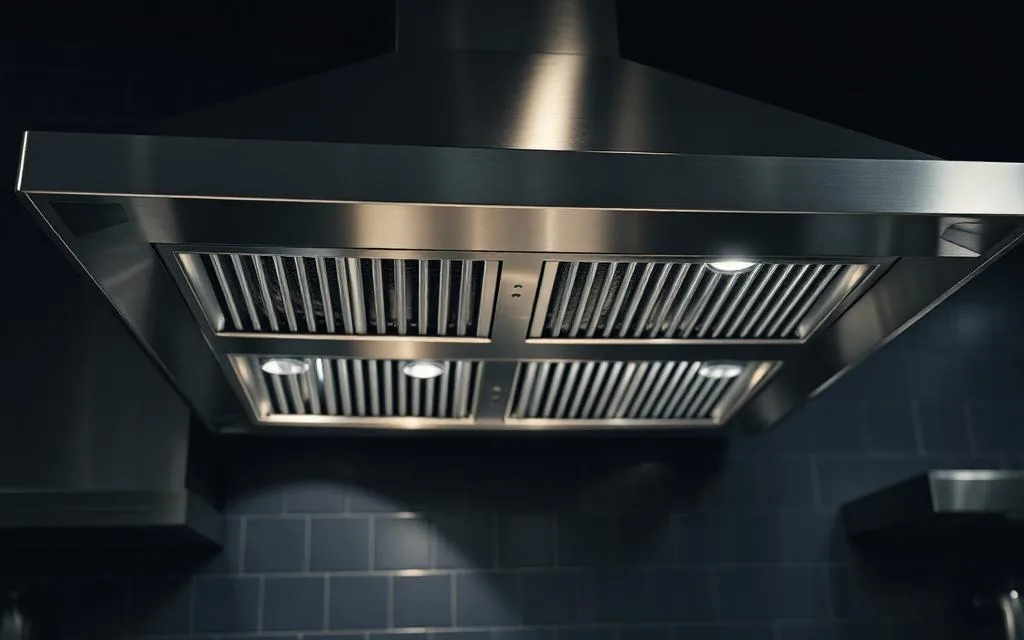
Baffle filters are the standard for commercial hoods because they trap grease by forcing air to change direction, and they lift out for cleaning. Mesh filters clog faster and are a higher fire risk, so baffle is the right choice for grease-heavy Indian cooking.
- Clean baffle filters at least weekly, and daily for heavy frying and tandoor lines.
- Wipe down the hood interior and capture area regularly to stop grease build-up.
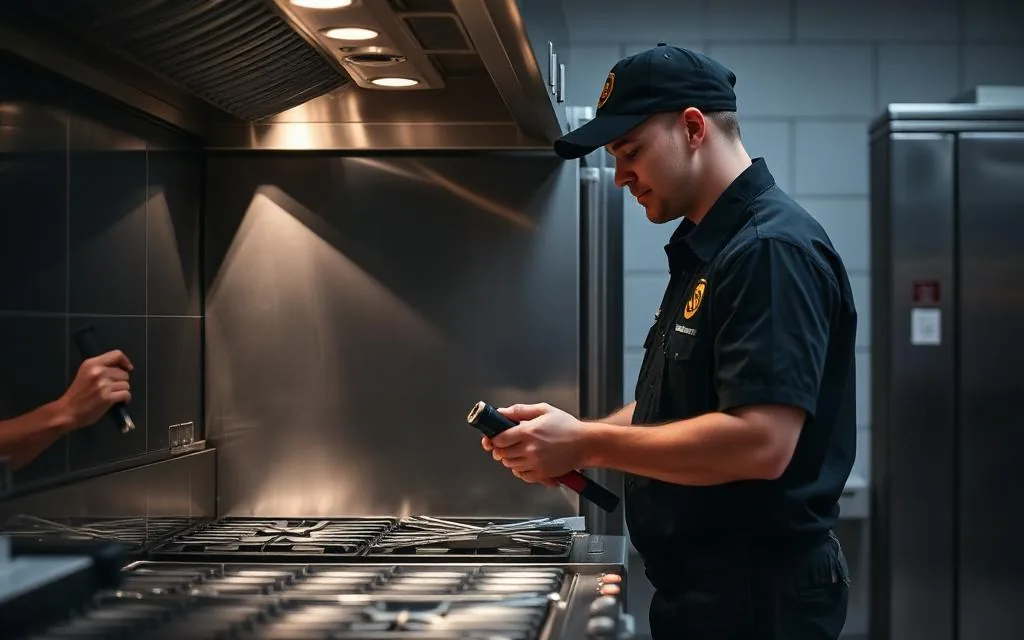
- Have the full duct and fan professionally cleaned on a scheduled basis, because grease in the duct is a serious fire hazard.
- Inspect the fresh-air supply and fan belts during routine maintenance so airflow stays balanced.
Getting the exhaust system right
The exhaust system is one of the few parts of a kitchen that is genuinely difficult and costly to change later, so it must be designed with the cooking line, not after it. Match the hood type to the line position, size the CFM to the heaviest cooking load, balance it with tempered make-up air, and set a filter and duct cleaning schedule from day one. Done properly, the hood keeps the kitchen cool, clear and safe through every shift.
Looking at the equipment itself? See our range of exhaust hoods and ventilation systems. It all starts with our materials and quality standards. For more on this, read our guide to maintaining your exhaust and equipment.
Come across a term you are not sure about? Our commercial kitchen equipment glossary explains 100+ terms in plain English.