FSSAI Commercial Kitchen Equipment Requirements India - Complete Guide
Who this is forThis guide is for restaurant, cloud kitchen and canteen owners preparing a commercial kitchen to meet FSSAI equipment and material requirements in India.
FSSAI requires commercial kitchen equipment to have food-contact surfaces that are smooth, non-toxic, non-absorbent and easy to clean, which in practice means grade 304 stainless steel for every surface that meets food or water. Beyond materials, FSSAI requires the layout to separate raw, cooked and washing areas, equipment to be designed for easy cleaning, and proper water and pest control. During an audit, inspectors check the steel grade, the condition of surfaces, the separation of work areas and the cleaning practices in use. This guide sets out exactly what FSSAI expects from your equipment and layout across India.
Key facts
- FSSAI requires food-contact surfaces to be smooth, non-toxic, non-absorbent and easy to clean, which in practice means grade 304 stainless steel.
- The kitchen layout must separate raw, cooked and washing areas to prevent cross-contamination.
- Equipment must be designed for easy cleaning and sanitisation, with coved corners and sealed joints that leave no place for waste to collect.
- During an audit, inspectors check material grade, surface condition, workflow separation, cleaning practices, water quality and pest control.
Food-contact surface requirements
The core FSSAI rule for equipment is that any surface touching food must be safe and cleanable. It must be non-toxic so nothing leaches into food, non-absorbent so it does not soak up liquids or odours, smooth so bacteria cannot lodge in the surface, and corrosion resistant so it does not pit or rust under constant washing. Grade 304 stainless steel meets all of these, which is why it is the standard for food-contact and wet-side surfaces in compliant kitchens.
Material grade specifications
Grade matters because a corroding surface cannot be kept hygienic. Grade 304 stainless steel, with roughly 18 percent chromium and 8 percent nickel, resists the salt, acid, heat and cleaning chemicals of a working kitchen and stays sound for years. Lower grades with little nickel corrode faster and are not suitable for direct food contact. For compliance, confirm the grade of every food-contact surface in writing, and reserve any lower grade for dry structural parts that never meet food or moisture. Reputable commercial kitchen equipment manufacturers in Bangalore confirm grade 304 on the quotation as a matter of course.
Why lower grades fail an audit
A pitted or rusting surface harbours bacteria that cleaning cannot fully reach, which is exactly what a hygiene audit is designed to catch. Equipment built in the wrong grade may look fine when new but develops rust spots within months of real service, and by the time an inspection comes around it is a visible non-compliance. Building in grade 304 from the start avoids this entirely.
Workflow separation requirements
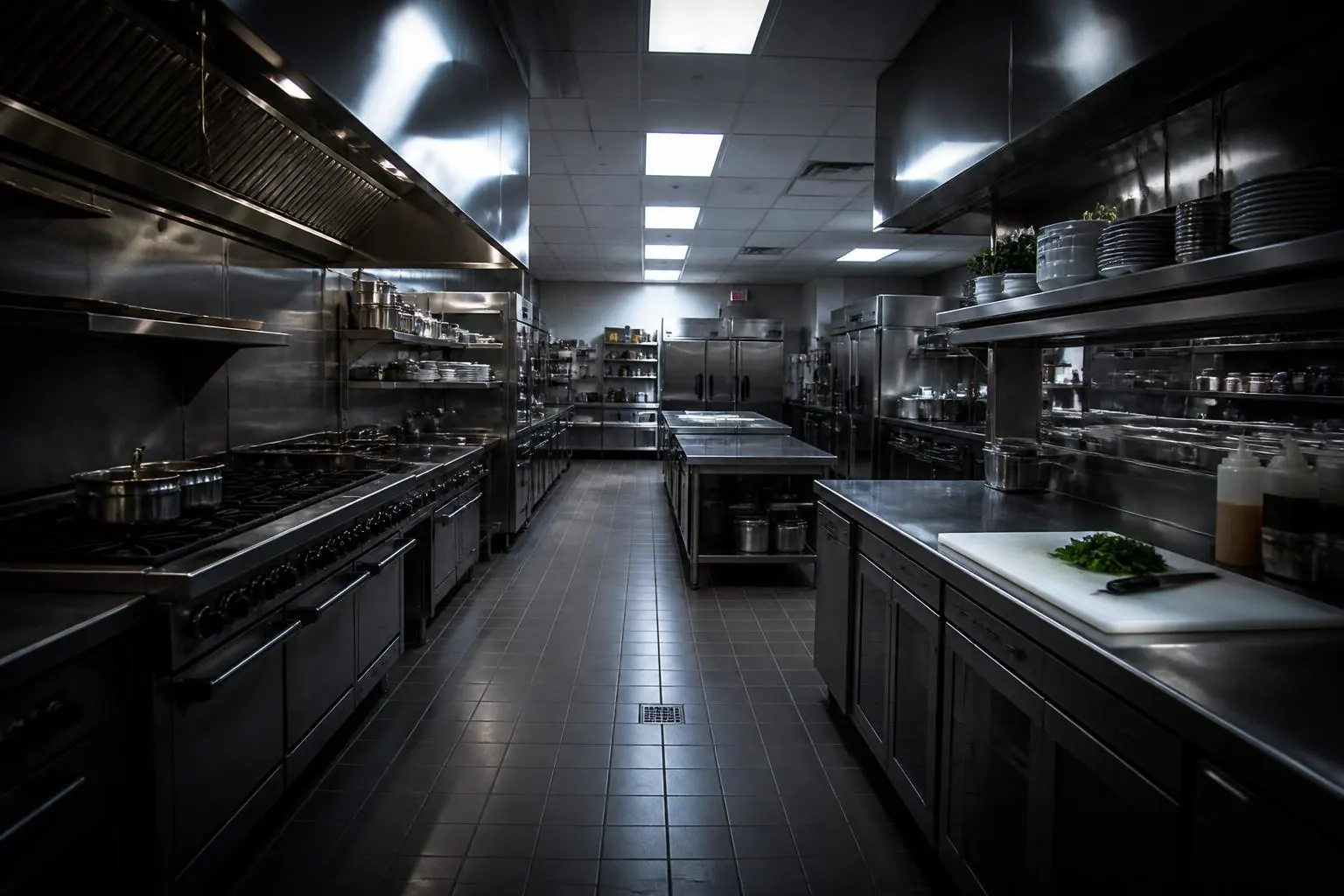
FSSAI requires the kitchen to be laid out so that raw, cooked and washing areas are separated to prevent cross-contamination. Raw meat and vegetables should be prepped away from cooked food, and the dishwashing area should be arranged so soiled and clean items never cross. A well-sequenced layout, running from receiving through prep, cooking and plating to wash-up, builds this separation into the flow of the kitchen rather than relying on staff to remember it. Experienced commercial kitchen consultants in Bangalore design this separation into the floor plan from the start.
- Separate preparation areas for raw and cooked food.
- A dishwashing section arranged so soiled and clean sides do not cross.
- Dedicated storage that keeps raw materials away from finished food.
- Clear one-directional flow from delivery to service.
Cleaning and sanitisation standards
Equipment must be designed so it can actually be cleaned and sanitised, not just wiped over. Coved internal corners, sealed and welded joints, and smooth finishes leave no crevices for food waste or grease to collect. Sinks must support proper washing and sanitising, and surfaces must withstand the cleaning chemicals used daily. Equipment that is hard to clean will fail an audit no matter how carefully staff work, because the design itself traps contamination.
What inspectors check during an audit
An FSSAI inspection looks at the whole system, not one item. Inspectors typically check the grade and condition of food-contact surfaces, whether raw and cooked areas are separated, how the dishwashing area is arranged, the cleaning and sanitisation practices in use, the water quality, and the pest-control measures in place. They also look for corrosion, damaged surfaces and crevices where waste can collect. A kitchen built in grade 304 with a properly separated layout and cleanable equipment answers most of these checks by design.
Building an FSSAI-compliant kitchen
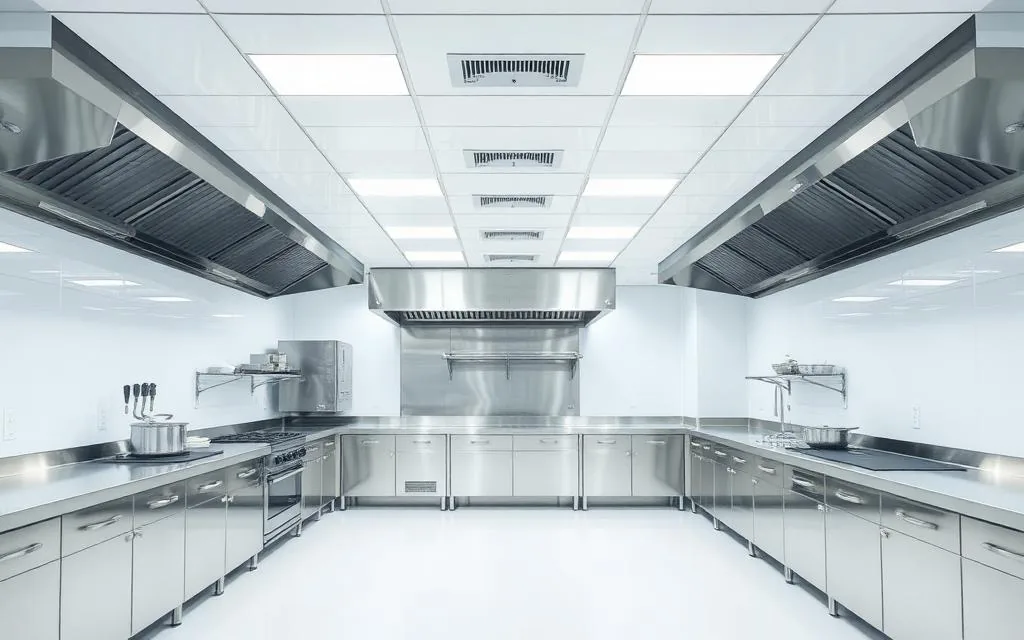
The straightforward path to FSSAI compliance is to build the kitchen right the first time: grade 304 stainless steel on every food-contact and wet-side surface, coved corners and welded joints for cleanability, and a layout that separates raw, cooked and washing areas. Confirm steel grade in writing, design the workflow for one-directional flow, and choose equipment that can genuinely be cleaned. A kitchen built to these standards passes inspection because compliance is built into the equipment and the layout, not added on afterwards.
Looking at the equipment itself? See our range of grade 304 stainless steel prep equipment. It all starts with our materials and quality standards. For more on this, read our guide to grade 304 stainless steel.
Getting ready for inspection? Work through our FSSAI compliance checklist and download the printable PDF to take into the kitchen.