Cloud kitchen equipment checklist for smaller cities
Who this is forThis guide is for cloud kitchen brands and founders expanding into tier two and tier three cities in India.
When opening a cloud kitchen in a smaller city, check power, water and gas reliability first, then choose robust, easy to service equipment. Standardise the equipment across outlets, keep common spare parts on site, plan for backup power where outages are frequent and confirm who will maintain the equipment locally.
Key facts
- Power and water reliability should be checked before choosing equipment for a smaller city site.
- Simple, robust equipment is easier to keep running where specialist service is far away.
- Spare parts and basic maintenance skills on site reduce downtime.
- Standardising equipment across outlets makes training and maintenance easier.
What is different about smaller cities
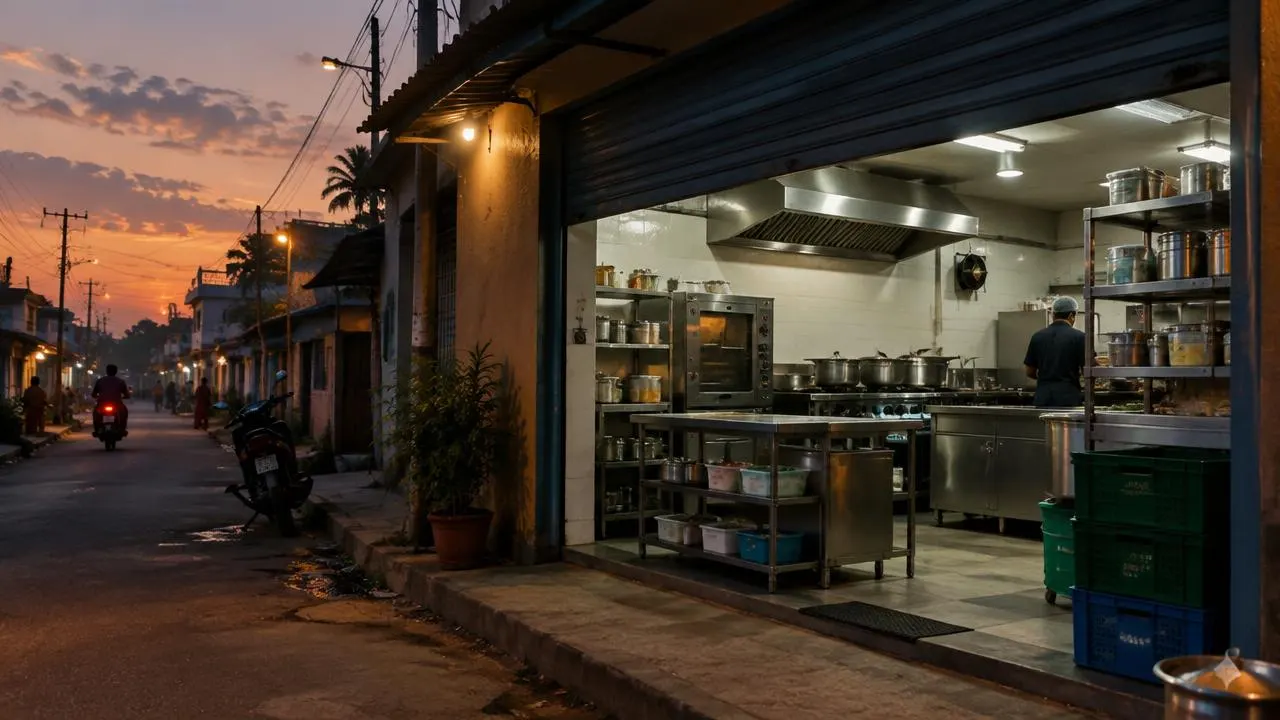
Delivery demand has grown well beyond the largest metros, and many brands are expanding into tier two and tier three cities. The core equipment list stays similar, but conditions change. Utilities may be less reliable, specialist technicians may be further away and the site may be an older building not designed for a commercial kitchen. The checklist below focuses on these differences.
For the full base list of what any cloud kitchen needs, start with our full cloud kitchen equipment list.
Site and utility checks
- Sanctioned electrical load and voltage stability at different times of day.
- Frequency and length of power cuts, and whether a generator or inverter is needed.
- Water supply reliability and whether storage tanks are needed.
- Water hardness, which affects dishwashers and steam equipment.
- LPG delivery reliability and a safe location for a cylinder bank.
- Drainage capacity and space for a grease trap.
- A route for exhaust ducting that will not trouble neighbours.
Equipment checklist
Cooking
- Gas ranges and burners suited to the menu, with simple controls.
- Induction only where power supply is reliable enough.
- Fryers, griddles or tandoors only if the menu needs them.
Preparation and storage
- Grade 304 stainless steel work tables with undershelves.
- Sinks for prep and pot washing, plus a separate hand wash basin.
- Wall shelving and racks for dry goods and packaging.
Refrigeration
- Reach-in and undercounter refrigerators sized to actual stock.
- Voltage protection for compressors where supply fluctuates.
Exhaust and safety
- A correctly sized hood with baffle filters and outdoor discharge.
- Fresh air supply.
- Gas leak detection and fire extinguishers.
Dispatch
- Packing counter near the entrance.
- Shelving for orders waiting for pickup.
Choose robust over complex
Equipment with complex electronics can be excellent, but if it fails in a city where the nearest specialist technician is far away, the kitchen may be down for days. In smaller cities, simple and robust equipment that a local technician can maintain is often the better choice. Grade 304 stainless steel construction, sound welds and standard parts all help.
Standardise across outlets
Using the same equipment layout and models across outlets makes training faster, lets you keep a shared stock of spare parts and helps area managers spot problems quickly. Steelkraft fabricates in-house, so the same station designs can be repeated across sites and adjusted for each room.
Plan maintenance before opening
Decide who will service the equipment. Train the kitchen team on basic daily and weekly care, keep spare gaskets, burner parts and filters on site, and agree a response arrangement for breakdowns.
Steelkraft manufactures cooking line equipment, undercounter refrigeration units and hood and duct systems in grade 304 stainless steel, with its own installation team. For regional planning, see our pages on cloud kitchen equipment in Karnataka and cloud kitchen equipment in Kerala.
Local hiring and training
Staff in smaller cities may be new to commercial kitchen equipment. Simple controls, clear labels and short training sessions help. Train at least two people on daily cleaning, filter care, refrigeration checks and gas safety, so the kitchen is not dependent on one person. Visual guides near each station work well where staff turnover is high.
Common mistakes when expanding
A common mistake is copying a metro kitchen layout without checking the new site's utilities. A kitchen designed around induction may struggle where power cuts are frequent. Another is choosing complex equipment that no local technician can repair. A third is underestimating water quality. Hard water damages dishwashers and steam equipment quickly without a softener.
Some brands also sign leases before confirming the exhaust route. In older buildings and narrow streets, finding a safe discharge point can be difficult, so check this early.
Review after opening
After the first month, review breakdowns, utility issues and staff feedback. Use these lessons to adjust the standard design for the next city.
Delivery coverage and site choice
In smaller cities, delivery zones can be more spread out, and road conditions affect delivery times. Choose a site close to the areas where most orders will come from, with easy access for riders and parking for two wheelers. A location on a busy main road may look attractive but can make rider pickup slow. Check how long it takes to reach key residential areas at peak times before you commit. A good site reduces delivery time, keeps food quality higher on arrival and makes the kitchen easier to run.
Frequently asked questions
Is a cloud kitchen in a smaller city set up differently?
The core equipment is similar, but utility reliability, service access and building condition often differ. Plan for backup power, robust equipment and local maintenance.
Should I use induction in a smaller city cloud kitchen?
Only where the electrical supply is stable and sufficient. Where outages are frequent, gas or a mix of gas and induction is often more practical.
Why standardise equipment across outlets?
Standard equipment makes training simpler, allows shared spare parts and makes maintenance faster, which matters more as the number of outlets grows.
If you are planning outlets across several cities, talk to Steelkraft about a standard kitchen design.