FSSAI advisory on corroded kitchen equipment explained
Who this is forThis guide is for restaurant, hotel, canteen and cloud kitchen owners who want to understand FSSAI's 2026 advisory on corroded and damaged equipment.
On 15 June 2026 FSSAI issued an advisory telling food businesses to use only food grade, corrosion resistant knives, blades and cutting equipment, kept free from rust, chips, paint, cracks and breakage. Damaged tools must be removed and replaced. The advisory names cutting tools, but the rule it relies on covers all food contact equipment.
Key facts
- FSSAI issued the advisory on 15 June 2026 under file number RCD-15001/11/2021-Regulatory-FSSAI.
- It directs food businesses to use only food grade, corrosion resistant knives, blades and cutting equipment.
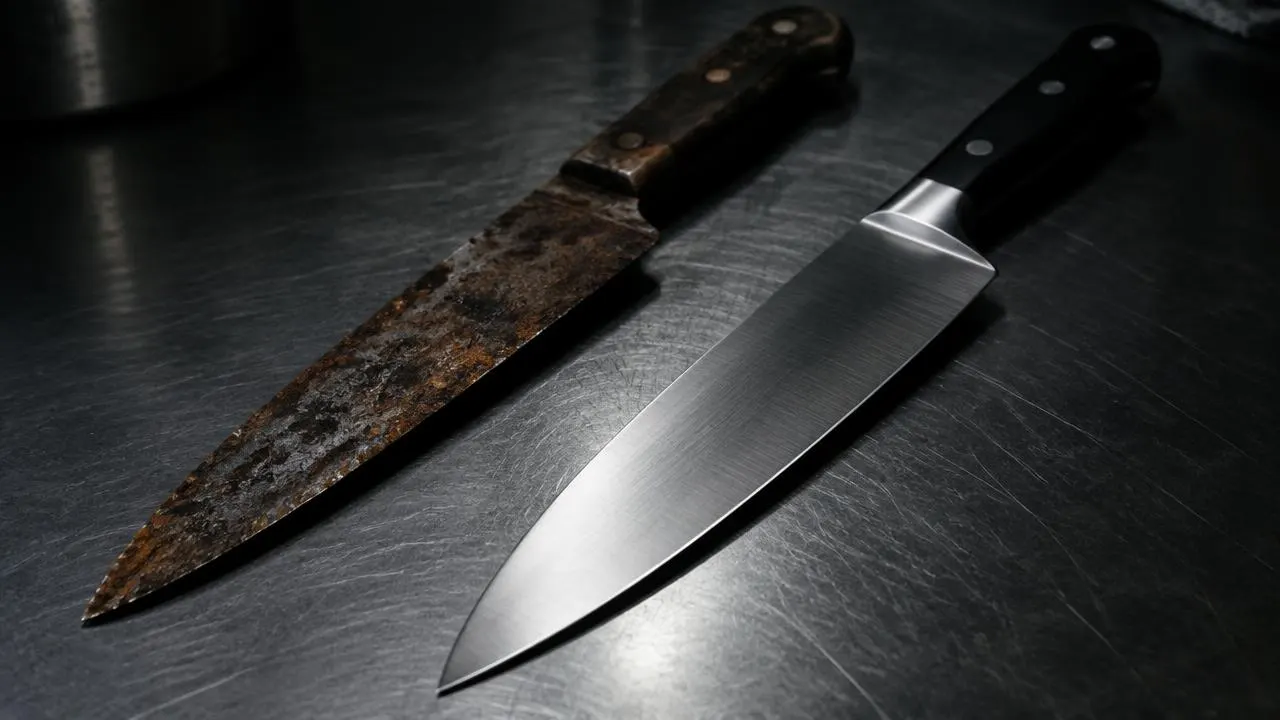
- Rusted, corroded, chipped, painted, cracked or broken cutting tools must be removed and replaced.
- The advisory rests on Schedule 4, which already requires corrosion resistant food contact surfaces.
This article summarises the advisory as reported from the official document. It is not legal advice. Check the current text on the FSSAI website before acting.
What the advisory says
The advisory, file number RCD-15001/11/2021-Regulatory-FSSAI, states that FSSAI had been told some food businesses were using rusted, corroded, chipped, painted, damaged or otherwise unsuitable knives, blades and cutting equipment during handling, preparation, processing, cutting, slicing and packaging. It says this may cause physical, chemical and microbiological contamination of food.
It directs food businesses to:
- Use only food grade, corrosion resistant knives, blades and cutting equipment.
- Keep them sound and hygienic, free from rust, corrosion, chipping, paint, cracks, breakage or other defects.
- Remove defective equipment from use and replace it.
- Follow adequate cleaning, sanitation and sterilisation procedures where applicable.
Commissioners of Food Safety in the states and Union Territories, and FSSAI regional directors, were asked to direct food businesses accordingly and ensure compliance.
The rule behind it
The advisory does not create a new standard. It points to Schedule 4 of the Food Safety and Standards (Licensing and Registration of Food Businesses) Regulations, 2011. Schedule 4 requires that equipment, utensils and food contact surfaces used in handling, preparation, processing, packaging and storage are made of food grade, non toxic, corrosion resistant materials and kept hygienic to prevent contamination. They also have to be cleaned and disinfected at suitable intervals.
So although the advisory talks about cutting tools, the same requirement applies to work tables, sinks, shelving, trolleys, containers and cooking surfaces that touch food.
Why corrosion is a food safety problem
Physical contamination
Rust flakes, chipped metal and paint can break off and end up in food.
Hygiene
Pitted and corroded surfaces hold food residue and bacteria. They are harder to clean properly, so sanitising them is less effective.
Chemical contamination
Corroding metal and flaking coatings can transfer unwanted material into food, especially with acidic or salty ingredients common in Indian cooking.
How to check your kitchen
- Inspect every knife, cleaver, slicer blade and grater for rust, chips and cracks.
- Check cutting boards for deep grooves and damage.
- Look at work table tops, sink bowls and shelves for rust spots, pitting and flaking paint.
- Check welds and joints on tables and racks, where corrosion often starts.
- Look underneath equipment and inside cabinets, not only at visible surfaces.
- Remove painted or coated metal from food contact use where the coating is damaged.
Our FSSAI inspection equipment audit checklist gives a fuller list to work through.
Choosing equipment that stays compliant
The simplest way to meet the corrosion requirement over time is to use materials that resist corrosion in a wet, salty, acidic kitchen. Grade 304 stainless steel is widely used for this reason. Lower grades and painted mild steel can corrode sooner, especially at welds and edges. Our guide on why grade 304 matters at an FSSAI inspection explains the difference.
Steelkraft manufactures custom stainless steel tables and racks, preparation tables and sinks and trolleys in grade 304 stainless steel, fabricated in-house. For local projects, see our pages on stainless steel kitchen equipment in Bangalore and hotel kitchen equipment in Hyderabad.
Building a replacement routine
The advisory makes clear that defective items should be removed and replaced, not kept in use until they fail completely. Many kitchens find it helps to set a routine. Inspect knives and cutting tools weekly. Check tables, sinks and racks monthly. Keep a small stock of spare knives and cutting boards so damaged items can be taken out of service immediately. Record what was replaced and when, which also supports your records during an inspection.
Why cheap replacements cause repeat problems
Replacing a rusted table with another low grade or painted table often brings the same problem back within months, especially in wet areas such as sinks and pot wash. Paying attention to the steel grade and weld quality when replacing equipment avoids repeated spending and repeated compliance issues. Ask for written confirmation of the steel grade and check welds before accepting new items.
Cleaning also matters. Steel wool and harsh abrasive powders scratch stainless steel and can leave particles that rust. Use suitable cleaners and soft pads, and rinse surfaces well after using chlorine based products.
Frequently asked questions
Does the FSSAI advisory only apply to knives?
The advisory names knives, blades and cutting equipment. It relies on Schedule 4, which requires all food contact equipment and surfaces to be food grade, corrosion resistant and hygienic.
Can a rusted table be cleaned instead of replaced?
Light surface marks on stainless steel can sometimes be removed. Pitting, flaking paint or corrosion at welds usually means the item is no longer suitable for food contact.
When was the FSSAI advisory on corroded equipment issued?
It was issued on 15 June 2026 under file number RCD-15001/11/2021-Regulatory-FSSAI and is addressed to all food businesses.
If you would like a second opinion on equipment that may no longer be suitable, contact the Steelkraft team.