FSSAI inspection equipment audit: practical checklist
Who this is forThis checklist is for kitchen owners, managers and head chefs who want to audit their equipment before an FSSAI inspection.
Before an FSSAI inspection, audit every item of equipment that touches food or affects hygiene. Check surfaces for rust, pitting, damaged coatings and rough welds, confirm refrigeration holds safe temperatures, test washing and hand wash stations, and make sure cleaning and maintenance records are up to date. Fix or replace anything that fails.
Key facts
- An equipment audit should cover every food contact surface, not only the visible ones.
- Corrosion, damaged coatings and rough welds are common problems found during audits.
- Refrigeration temperatures should be checked and recorded, not assumed.
- Keeping records of cleaning and maintenance supports what the inspector sees.
This is a practical checklist, not a legal document. For the official requirements, refer to Schedule 4 of the Licensing and Registration Regulations on the official FSSAI site. For an overview of the rules, see our guide to FSSAI kitchen equipment requirements in India.
How to run the audit
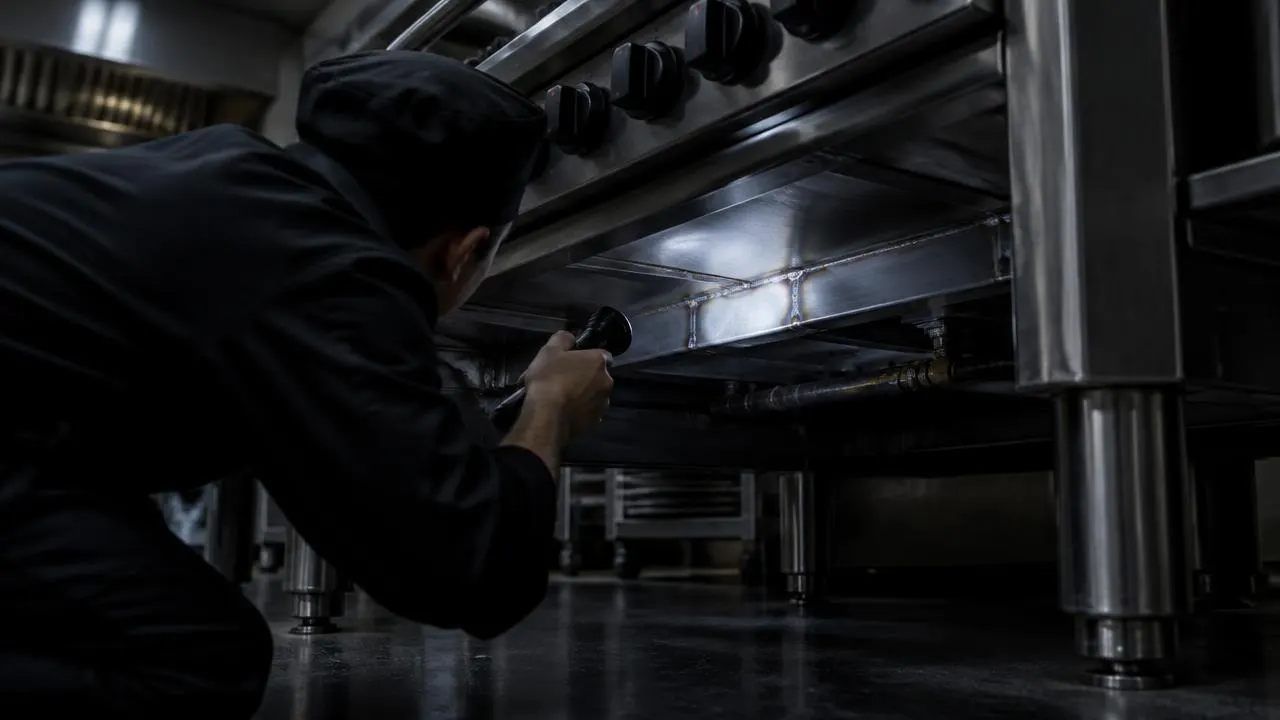
Walk the kitchen in the order food moves: receiving, storage, preparation, cooking, holding, service and washing. Take a torch, a notebook or phone and a calibrated probe thermometer. Look underneath and behind equipment, not only at the top surfaces. Record each problem with a photo and a plan to fix it.
Receiving and dry storage
- Shelving is corrosion resistant, stable and raised off the floor for cleaning.
- No rust, flaking paint or broken shelves.
- Containers are food grade, covered and labelled.
- Floor and wall junctions behind racks are reachable for cleaning.
Cold storage
- Each fridge, freezer and cold room holds its set temperature, checked with a probe thermometer.
- Door gaskets are intact and doors close fully.
- Inside surfaces and shelves are free from rust and damage.
- Temperature logs are filled in and current.
- Condensers are clean and units are not placed beside heat sources.
Steelkraft manufactures reach-in and undercounter refrigeration built for kitchen conditions.
Preparation area
- Work tables have smooth, intact tops with no rust, pitting or open seams.
- Welds are smooth and continuous with no gaps that trap food.
- Sinks drain freely, have no leaks and are free from corrosion.
- Knives, blades and slicers are corrosion resistant and free from rust, chips and cracks.
- Cutting boards are not deeply grooved and are colour coded where used.
- Separate areas or boards for raw and cooked food.
FSSAI's June 2026 advisory specifically targets rusted and damaged cutting equipment. Our article on FSSAI's June 2026 corrosion advisory explains it.
Cooking area
- Ranges and burners are clean, with no heavy carbon build up.
- Gas lines, valves and hoses are in good condition with no smell of gas.
- Exhaust hood filters are clean and fitted correctly.
- No grease dripping from the hood or ducting onto cooking surfaces.
- Surfaces around and under equipment are cleanable and clean.
Holding and service
- Hot holding equipment keeps food hot, checked with a probe.
- Bain marie wells are clean and free from scale and corrosion.
- Display counters and sneeze guards are intact and clean.
Washing and hygiene
- Hand wash stations are working, with soap and drying facilities.
- Dishwashers reach their wash and rinse temperatures.
- Pot wash sinks drain freely and are free from leaks and corrosion.
- Waste bins are covered and placed away from food preparation.
See our washing equipment for sinks and pot wash units.
Records
Inspectors look at what they can see and at the records that support it. Keep cleaning schedules, temperature logs, pest control records and maintenance records together and current. A short note of when damaged equipment was replaced is also useful.
After the audit
Sort the findings into three groups: fix today, fix this week and plan to replace. Anything that puts food at direct risk, such as rusted knives or a fridge holding the wrong temperature, should be dealt with immediately.
Steelkraft manufactures fabricated stainless steel equipment in grade 304 stainless steel, fabricated in-house, with its own installation team. For local projects, see our pages on commercial kitchen consultants in Bangalore and canteen kitchen equipment in Hyderabad.
Utilities and safety
- Gas leak detector and alarm tested and working.
- Fire extinguishers in date and accessible.
- Electrical cables and plugs undamaged and kept away from water.
- Lighting adequate over preparation and cooking areas.
- Drains covered and grease trap maintained.
Pest proofing
- Gaps around pipes and cables sealed.
- Doors close fully and windows have screens where needed.
- No hollow equipment legs or frames open to pests.
- Pest control records current.
Run this audit regularly, not only when an inspection is expected. Kitchens that audit monthly find problems while they are still small, and the inspection becomes routine rather than stressful.
Who should run the audit
The audit works best when two people do it together: the kitchen manager or head chef, who knows how equipment is used, and someone with fresh eyes, such as a manager from another outlet. One person tends to stop noticing problems they see every day. Rotate the second person from time to time. Share the findings with the whole team so everyone understands why certain items were replaced and what to watch for during daily cleaning.
Frequently asked questions
How often should I audit my kitchen equipment?
A short weekly walk through and a fuller monthly audit work well for most kitchens. Also audit after any major repair or menu change.
What equipment problems are found most often?
Common issues include rusted or damaged cutting tools, corroded table tops and welds, worn fridge gaskets, dirty exhaust filters and missing temperature records.
Do I need to replace equipment that has minor marks?
Light surface marks on stainless steel can often be cleaned. Pitting, corrosion at welds or damaged coatings on food contact surfaces usually mean the item should be repaired or replaced.
If your audit turns up equipment that needs replacing, contact Steelkraft to discuss options.