
FSSAI and HACCP Compliance for Commercial Kitchens - What Every Restaurant Owner Must Know
Who this is forThis guide is for restaurant owners and kitchen managers preparing a commercial kitchen for FSSAI and HACCP inspection.
To pass inspection, your kitchen needs a valid FSSAI licence plus a HACCP food-safety plan built into the design, not bolted on later. FSSAI is the legal baseline you must meet to hold a licence. HACCP is the system that controls food-safety risks before they reach a customer. Build both into your layout, your equipment and your daily routine. That is what keeps your doors open and your customers safe.
Key facts
- An FSSAI licence is a legal requirement for every commercial kitchen in India and sets standards for hygiene, premises, equipment, water and pest control.
- HACCP is a preventive food safety system that sets controls at critical points such as cooking temperature, cold storage and cross contamination.
- Food contact surfaces must be grade 304 stainless steel with smooth sealed joints and coved corners to pass a hygiene inspection.
- Inspectors require documented records such as temperature logs, cleaning schedules and pest control reports to prove food safety is managed daily.
Understanding the two frameworks
The two systems work together but serve different purposes. One is the law you must follow, the other is the method that helps you follow it consistently.
What FSSAI requires
FSSAI is the national food authority, and its licence is a legal requirement for any commercial kitchen. It sets standards for hygiene, premises, equipment, water quality, pest control, waste handling and staff health. Inspectors check that your kitchen is built and operated to keep food free from contamination, and a failed inspection can suspend your licence. Specifying compliant commercial kitchen equipment in Bangalore from the drawing stage, whether for a restaurant kitchen in Bangalore or a hotel kitchen in Bangalore, removes most of the findings inspectors raise.
What HACCP adds
HACCP stands for Hazard Analysis and Critical Control Points. It is a preventive system that identifies where food safety can break down, such as cooking temperature, cold storage or cross contamination, and sets controls and checks at each of those points. It turns food safety from a hope into a documented, repeatable routine.
How compliance shapes your kitchen design
Much of compliance is decided long before an inspector arrives. It is built into the layout and the equipment you choose. A kitchen designed for hygiene passes inspection almost automatically.
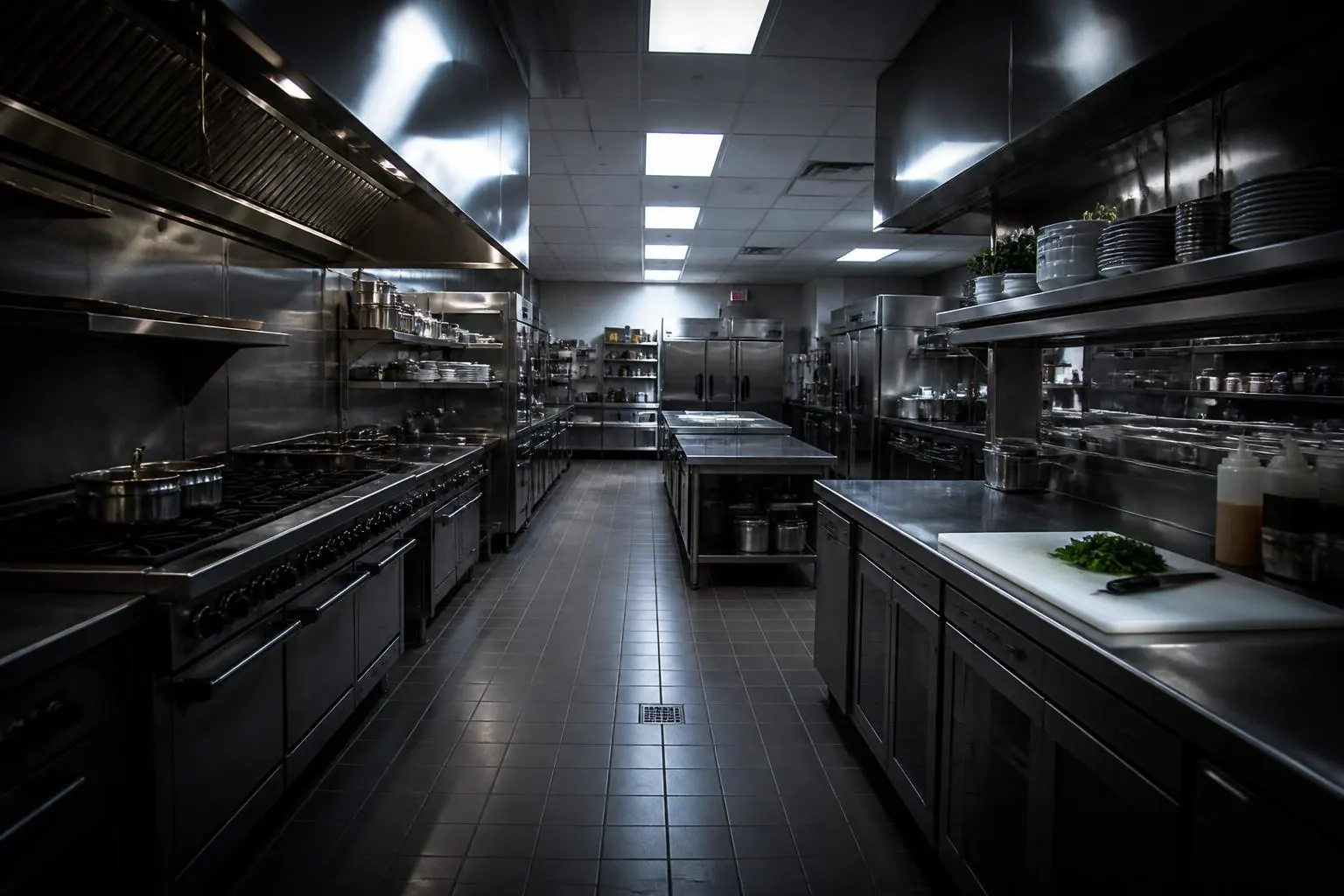
- Food contact surfaces in grade 304 stainless steel that can be cleaned and sanitised without harbouring bacteria.
- Smooth, sealed joints and coved corners that leave nowhere for grime to collect.
- Clear separation between raw and cooked food zones to prevent cross contamination.
- Proper drainage, ventilation and handwash stations placed where staff actually need them.
- Cold storage that holds and displays safe temperatures reliably during a full service.
The role of documentation
Compliance is not only about how the kitchen looks, it is about what you can prove. Inspectors want records that show your controls are working day after day. Temperature logs, cleaning schedules, pest control reports, staff health checks and supplier records all demonstrate that food safety is managed rather than assumed.
Build habits, not last minute scrambles
Kitchens that treat record keeping as a daily habit sail through inspections. Those that scramble to recreate logs the night before always show the gaps. Assign clear responsibility for each record, keep the forms simple, and make checking them part of the closing routine.
Preparing for inspection
Treat every inspection as a confirmation of how you already work, not an event to prepare for. Walk your kitchen with fresh eyes, look for chipped surfaces, blocked drains, mislabelled storage or expired stock, and fix them as routine. A kitchen that is built well and run with discipline rarely fears the inspector.
Compliance protects more than your licence. It protects the trust of every guest who eats your food. Design your kitchen around hygiene from the start, keep honest records, and FSSAI and HACCP become a natural part of how you operate.
Looking at the equipment itself? See our range of commercial dishwashers. It all starts with our materials and quality standards. For more on this, read our guide to planning a kitchen layout.
Getting ready for inspection? Work through our FSSAI compliance checklist and download the printable PDF to take into the kitchen.