How to Set Up a Restaurant Kitchen in Bangalore
Who this is forThis guide is for first-time restaurant owners setting up a commercial kitchen in Bangalore who need the licensing, equipment and cost picture in one place.
To set up a restaurant kitchen in Bangalore, you need three approvals in place before you cook a single dish: an FSSAI licence, a BBMP trade licence and an adequate BESCOM electrical load. Alongside the paperwork, you design the kitchen around your menu, size the equipment to peak covers, and budget for the civil and service work around it. A typical mid-size Bangalore restaurant kitchen costs 15 to 50 lakh rupees and takes 8 to 16 weeks from design to first service. This guide walks through the licensing, the equipment and the timeline the way it actually happens on the ground.
Key facts
- A restaurant kitchen in Bangalore needs an FSSAI licence, a BBMP trade licence and an adequate BESCOM electrical load before it can legally operate.
- Equipment selection should follow the cuisine, because a biryani kitchen, a continental kitchen and a South Indian tiffin kitchen need different cooking lines.
- A typical mid-size Bangalore restaurant kitchen costs between 15 and 50 lakh rupees including equipment and services.
- From design to first service, a Bangalore restaurant kitchen setup usually takes 8 to 16 weeks depending on civil work and licensing.
Get the licensing right first
Licensing shapes your timeline, so start it early and run it in parallel with the fit-out. A restaurant with a full kitchen usually needs a State FSSAI licence rather than basic registration, and the premises must meet FSSAI hygiene and layout standards to qualify. The BBMP trade licence authorises you to operate a food business at the address, and it depends on the building's approved use. Both should be moving while the kitchen is being built, not after.
FSSAI registration
The FSSAI licence sets standards for hygiene, premises, equipment, water quality and pest control. Food-contact surfaces must be grade 304 stainless steel with smooth, sealed joints, and the layout must separate raw and cooked areas. Planning the kitchen to these standards from the start means the licence and any inspection go smoothly rather than forcing rework.
BBMP trade licence and BESCOM load
The BBMP trade licence is issued for the specific premises and its approved commercial use, so confirm the building qualifies before you sign a lease. BESCOM electrical load is often underestimated. A restaurant running refrigeration, exhaust fans, dishwashers and lighting needs a sanctioned load that matches the connected equipment, and upgrading the load later takes time. Calculate the total connected load during design and apply for the right sanctioned load early.
Select equipment by cuisine
The single biggest equipment decision is your cuisine, because it dictates the cooking line. Do not copy a generic equipment list. Match the line to what you actually serve.
- North Indian and biryani, built around tandoors, heavy open-burner ranges, bulk rice cooking and bhatti.
- Chinese and pan-Asian, built around Chinese ranges with blowers for high-flame wok cooking.
- South Indian tiffin, built around idli and dosa stations, bulk steamers and batter storage refrigeration.
- Continental and cafe, built around griddles, salamanders, convection ovens and a strong cold and prep section.
Design the layout for a Bangalore footprint
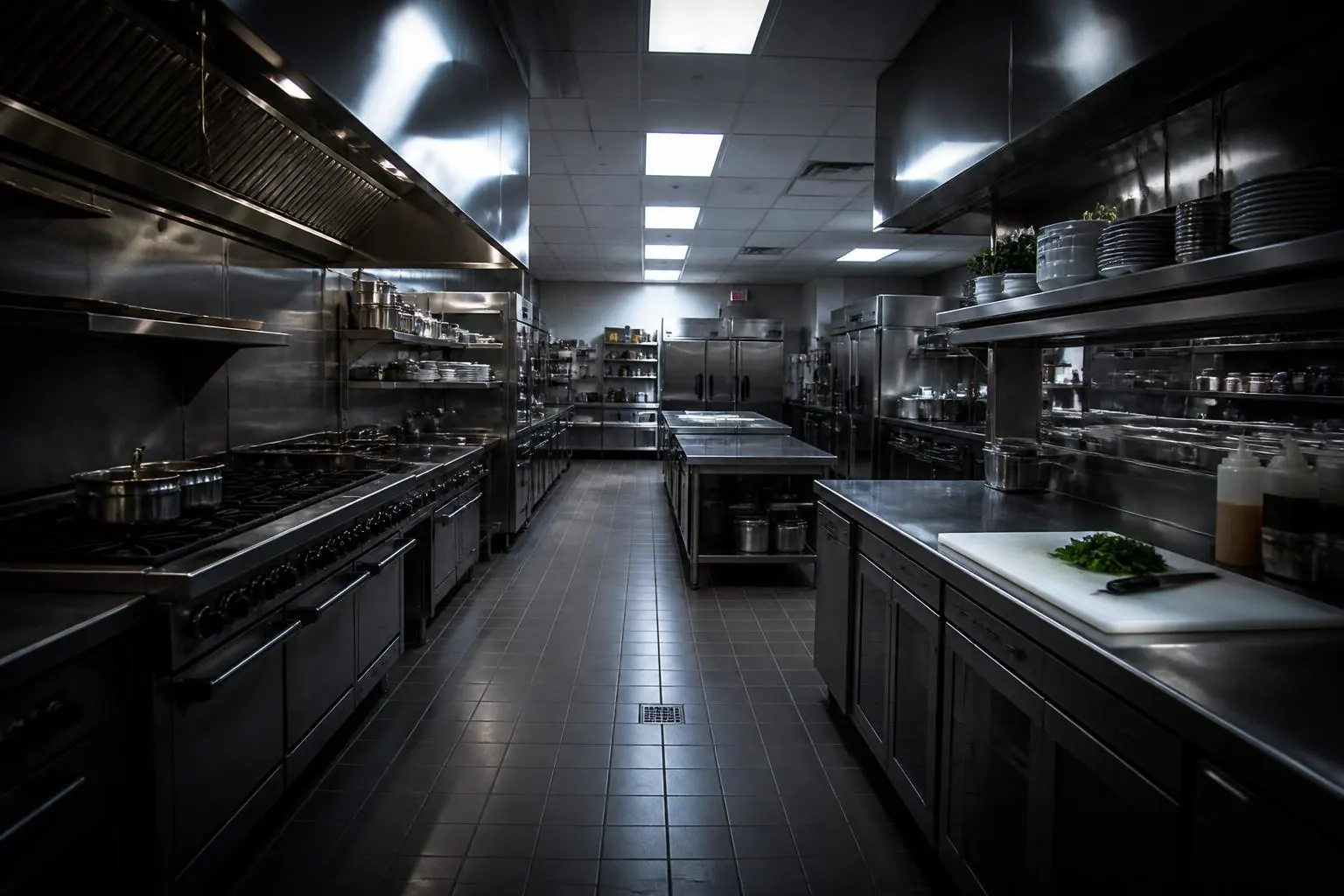
Commercial space in Bangalore is tight and rents are high, so the layout has to make every square foot work. Arrange the kitchen in the order food moves, from receiving and storage through prep, cooking, plating and wash-up, so nothing crosses its own path. Keep walkways at least a metre wide for safety and inspection, and leave service clearance around heavy equipment. Custom fabrication is often worth it in Bangalore because it uses awkward corners that off-the-shelf units waste. Sourcing restaurant kitchen equipment in Bangalore from established restaurant kitchen equipment manufacturers in Bangalore lets you specify units built to fit those exact dimensions.
Budget for the full project
A mid-size Bangalore restaurant kitchen usually lands between 15 and 50 lakh rupees. Equipment is the largest share, but exhaust ducting, gas piping, electrical work, plumbing and drainage add 20 to 40 percent on top. Build the exhaust and make-up air into the design from day one, because retrofitting ventilation after the line is installed is expensive and disruptive.
Plan a realistic timeline
From design to first service, plan for 8 to 16 weeks. Design and licensing run first and in parallel, followed by civil and service work, then equipment fabrication and delivery, and finally installation and commissioning. In-house fabrication shortens the equipment lead time and lets the kitchen fit the exact floor plan. Start licensing early, size the load correctly, choose equipment by cuisine, and a Bangalore restaurant kitchen comes together on schedule and passes inspection on the first attempt.
Looking at the equipment itself? See our range of commercial cooking ranges and tandoors. Every unit is built through our in-house build process. For more on this, read our guide to commercial kitchen equipment prices in India.
Getting ready for inspection? Work through our FSSAI compliance checklist and download the printable PDF to take into the kitchen.