Induction or gas for a commercial kitchen in India
Who this is forThis guide is for restaurant, hotel and cloud kitchen owners in India deciding whether to cook on induction, gas or a mix of both.
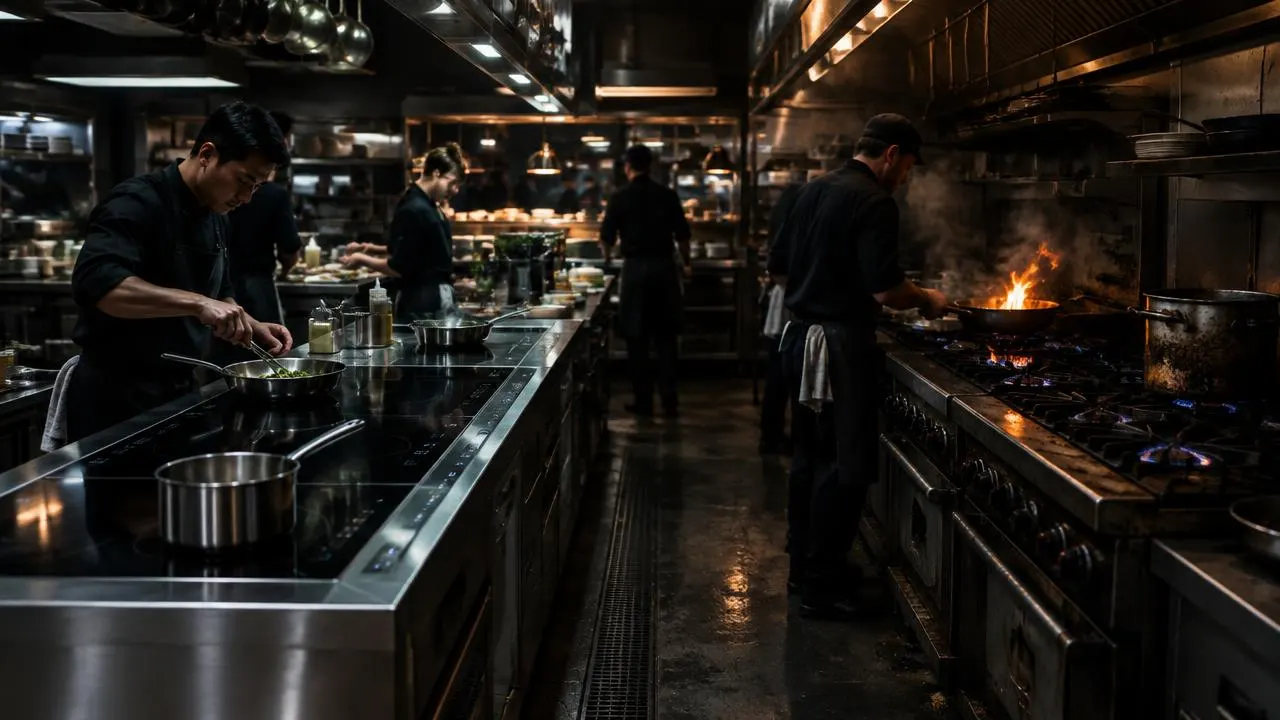
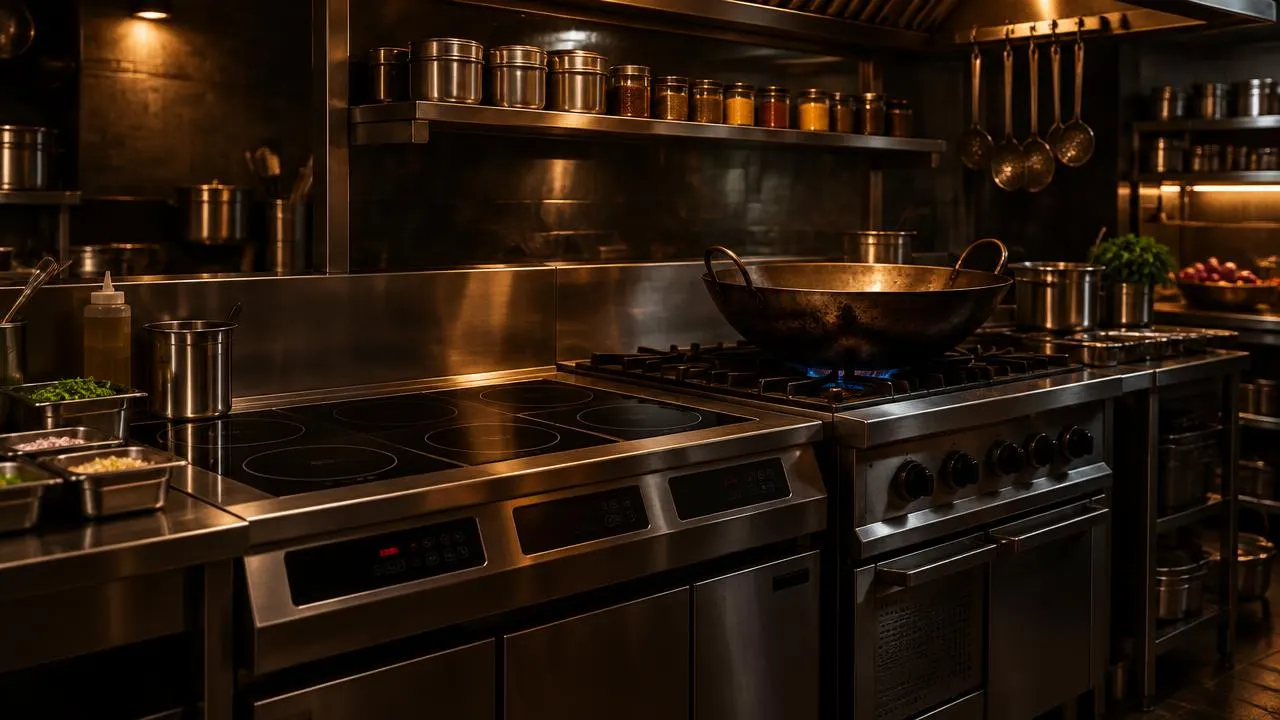
For most Indian commercial kitchens the honest answer is a mix. Induction suits steady boiling, simmering, gravies, rice and tempering in flat pans. Gas still suits high flame wok work, rotis on a tawa with direct flame finishing, and large round bottomed vessels. Choose the fuel for each station based on the food it cooks.
Key facts
- Induction heats the pan directly, so less heat escapes into the kitchen than with an open gas flame.
- Wok tossing, tandoor style cooking and open flame charring still work better on gas or charcoal.
- Induction needs flat bottomed ferromagnetic cookware and a properly sized electrical supply.
- Many Indian commercial kitchens get the best result by choosing the fuel station by station.
Why this question matters now
Many kitchen owners are looking at induction because of LPG supply concerns, heat in small kitchens and the wish to cut fuel waste. At the same time, Indian menus rely on techniques that were built around a flame. A decision made only on running cost or only on habit tends to go wrong. The better approach is to look at what each station does through a full service.
Where induction works well
Induction transfers energy into the base of the pan through a magnetic field. The pan heats, the glass top stays relatively cool and very little heat spills into the room. That has real benefits in a commercial kitchen.
- Gravies, dals and sauces that simmer for long periods with precise control.
- Boiling stations for rice, pasta and noodles in flat bottomed stock pots.
- Tempering and shallow frying in flat pans where steady heat matters more than flame.
- Small or poorly ventilated kitchens where ambient heat makes the room hard to work in.
- Hotel buffet live counters, where an open flame in front of guests is not ideal.
Because heat stays in the pan, staff comfort usually improves and the exhaust system has less heat to remove. Cleaning is also simpler, since spills do not bake onto a flat glass surface the way they do around a burner.
Where gas still makes more sense
Some Indian and Asian techniques depend on flame wrapping around the vessel or on very fast changes in heat. Induction can produce a lot of power, but it only heats the part of the pan touching the coil.
- Chinese and Indo Chinese wok cooking, where the cook lifts and tosses the wok constantly.
- Round bottomed kadais and large handis that do not sit flat on a glass top.
- Phulkas and rotis finished over an open flame.
- Charring vegetables or roasting papad directly on a burner.
Curved wok induction units do exist and they work well for some kitchens, but they need the right wok, training and a realistic view of the cooking style. Tandoors are a separate case and are usually charcoal, gas or electric units built for that purpose.
Power, gas and ventilation
Electrical supply
A commercial induction line draws a significant electrical load. Before choosing it, check the sanctioned load of the premises, the size of the incoming supply and whether the distribution board can take dedicated circuits. We cover this in detail in our guide on planning the power load for a commercial induction range.
Gas installation
A gas line needs a correctly designed LPG or piped gas installation, leak detection and proper ventilation. If the building already has a safe, well maintained gas bank, keeping gas for some stations can be the practical choice.
Exhaust and heat load
Induction reduces the heat the exhaust has to deal with, but it does not remove grease and steam. Every cooking line still needs a correctly sized hood. You can see the hood and duct options in our range of commercial exhaust systems.
Running cost is not the whole picture
Induction usually puts more of its energy into the food than an open flame does, so less energy is wasted. Whether that makes it cheaper to run depends on the local electricity tariff, the LPG or piped gas rate, the hours of use and how disciplined staff are about switching off. Work it out with your own numbers rather than relying on a general rule.
Also count the less obvious costs. Induction may need new cookware and electrical work. Gas needs regular safety checks, cylinder handling and more exhaust capacity. Over the life of the kitchen, these matter as much as the fuel bill.
A practical way to decide
Walk through the menu and list each station: what it cooks, the vessel it uses and how long it runs during service. Then mark each one as induction, gas or either. Many kitchens end up with induction for boiling, gravies and holding, and gas for wok, tawa and flame finishing work. This approach also reduces risk, because the kitchen can still cook if one fuel is interrupted.
Steelkraft manufactures gas and steam cooking equipment and complete commercial cooking ranges in grade 304 stainless steel, fabricated in-house, so a mixed line can be built to one consistent standard. If you are planning in a specific city, our pages on restaurant kitchen equipment in Bangalore and hotel kitchen equipment in Mumbai show how we approach local projects. For layout basics, read our guide to setting up a restaurant kitchen in Bangalore.
Frequently asked questions
Can induction handle Indian cooking in a restaurant?
Induction handles a large share of Indian cooking well, including gravies, dals, rice and tempering in flat pans. It is less suited to round bottomed kadais, wok tossing and open flame finishing, so most kitchens use it alongside gas.
Is induction safer than gas in a commercial kitchen?
Induction removes the open flame and gas leak risk at that station and keeps the kitchen cooler. It still needs correct electrical design, earthing and protection, so safety depends on a proper installation either way.
Do I need new cookware for induction?
Yes, in most cases. Induction needs flat bottomed cookware made of a magnetic material. Aluminium and many traditional vessels will not work unless they have a suitable induction base.
If you would like help deciding which stations should be induction and which should stay on gas, talk to the Steelkraft team.