Kitchen exhaust hood: how to choose the right system
By the Steelkraft teamPublished Updated
Who this is forThis guide is for restaurant, hotel and institutional kitchen owners choosing an exhaust hood and ventilation system.
To choose a commercial kitchen exhaust hood, match the hood type to your layout, base the airflow on the cooking equipment underneath, use stainless steel baffle filters, keep ducting short with cleaning access, select a fan that suits the duct system, and supply fresh air to replace what is removed. Treat it as one system, not separate parts.
Key facts
- Wall canopy, island canopy and low proximity hoods suit different kitchen layouts.
- Airflow should be based on the cooking equipment under the hood, not on room size alone.
- The hood, filters, ducting, fan and fresh air must be designed as one system.
- Access for cleaning hoods and ducts is essential for hygiene and fire safety.
Our existing how commercial exhaust hoods work explains how hoods work. This article is a decision guide for choosing a complete system.
How to choose, step by step
Step 1: choose the hood type
Wall canopy
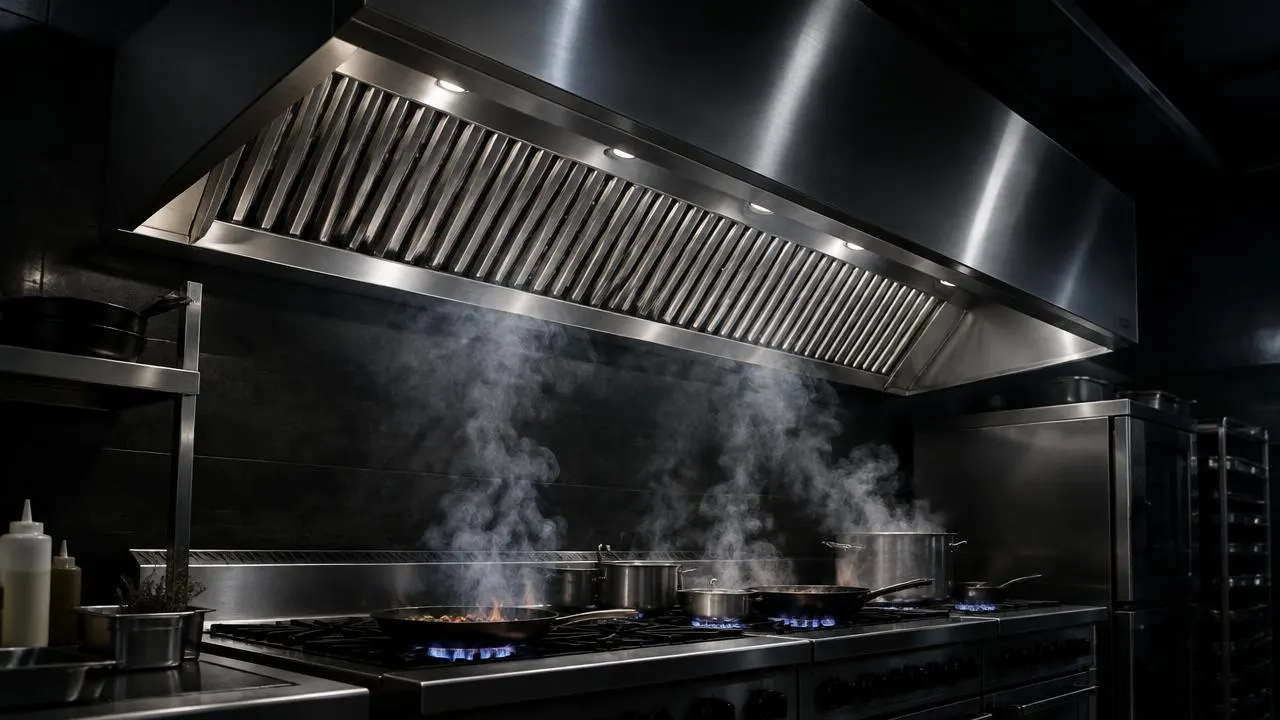
Mounted against a wall above a cooking line. The most common type in restaurants and cloud kitchens, and usually the most effective, since the wall helps contain rising smoke.
Island canopy
Hangs above a cooking line in the middle of the room. Open on all sides, so it needs more airflow and more overhang to capture smoke effectively.
Low proximity or back shelf
Sits low behind the equipment. Useful where ceiling height is limited, but suits lighter cooking loads.
Step 2: work out the airflow
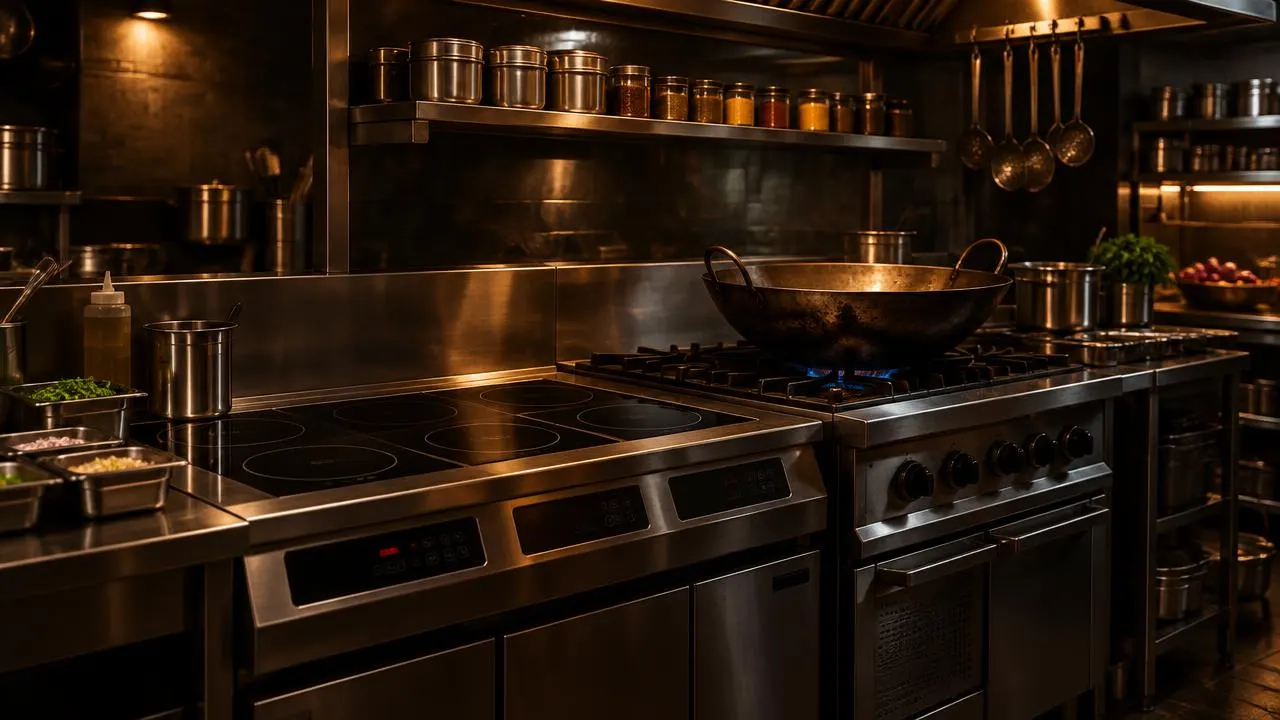
Airflow should be based on the equipment under the hood. Heavy duty equipment such as tandoors, charcoal grills, woks and fryers produces far more heat and smoke than steamers and boiling pans. List each item, its heat output and its position. A designer then calculates the required airflow and hood size. Avoid sizing on room area alone.
Step 3: choose filters
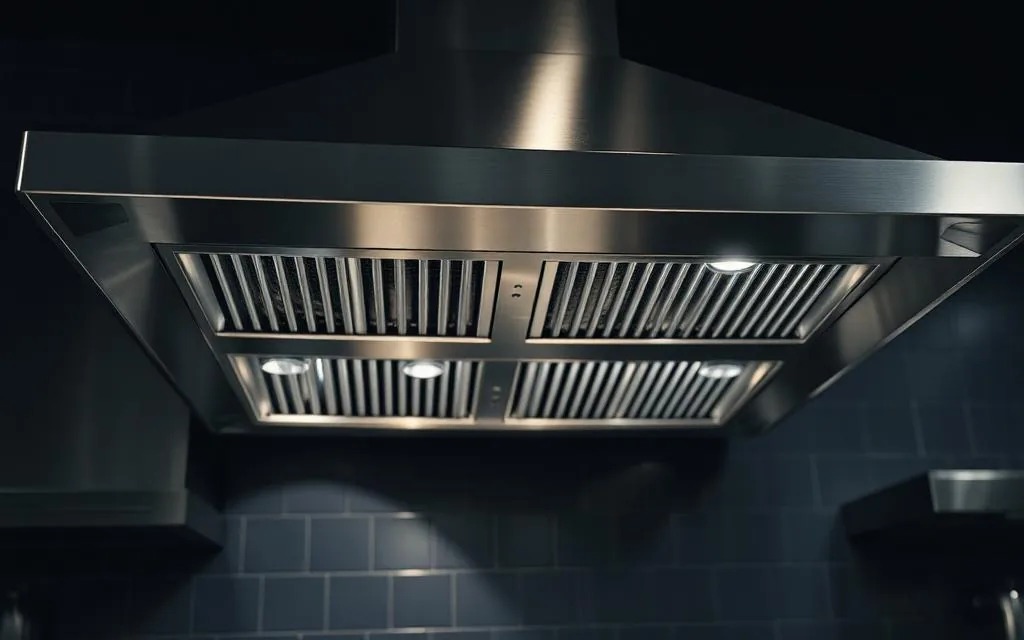
Stainless steel baffle filters are the standard for commercial cooking. They separate grease by forcing air to change direction, resist fire better than mesh filters and can be washed. For heavy grease loads or sites close to neighbours, additional grease and odour control may be needed.
Step 4: plan the ducting
- Shortest practical route to the outside, with as few bends as possible.
- Correctly sized duct for the airflow, so air speed stays in a sensible range.
- Sealed joints to prevent grease leaks.
- Access panels for cleaning along the route.
- Discharge away from windows, air intakes and neighbouring properties.
Step 5: select the fan
The fan must move the designed airflow against the resistance of the hood, filters and ducting. An undersized fan leaves smoke in the kitchen. An oversized fan wastes power and can be noisy. Place it where it can be serviced, and consider speed control so extraction can be reduced during quiet periods.
Step 6: supply fresh air
Every unit of air extracted must be replaced. Without fresh air, the hood under performs, doors slam or stick and gas burners may not burn cleanly. Fresh air can be introduced through a dedicated fan, often near the hood, and can be filtered or tempered for staff comfort.
Step 7: plan for cleaning and safety
Grease in hoods and ducts is a common cause of kitchen fires. Choose a hood that is easy to clean, with removable filters and smooth internal surfaces. Make sure ducts can be accessed. Follow local fire safety requirements, which may include fire suppression for some kitchens.
Material and build
Hoods face heat, steam and grease every day. Grade 304 stainless steel resists corrosion and cleans well. Look for sealed seams, a grease gutter and drain, and solid fixing to the structure.
Steelkraft manufactures exhaust hoods, ducting and fresh air systems in grade 304 stainless steel, fabricated in-house and installed by its own team, along with the commercial cooking stations that sits underneath. For local projects, see our pages on hotel kitchen equipment in Karnataka and commercial kitchen equipment manufacturers in Hyderabad.
Common mistakes
The most common mistake is choosing a hood by the size of the room instead of the equipment underneath. Another is fitting a hood that is shorter than the cooking line, so smoke escapes at the ends. Some kitchens choose an oversized fan to be safe, which wastes power and creates noise and draughts. Others forget fresh air entirely.
Ducting mistakes are also frequent: too many bends, undersized ducts and no cleaning access. These reduce performance and create fire risk over time.
Questions to ask a manufacturer
- What airflow have you designed for, and how was it calculated?
- What steel grade and thickness is the hood made from?
- How are the filters removed and cleaned?
- Where will the fan be located, and how will it be serviced?
- How will fresh air be supplied?
Clear answers to these questions show that the system has been designed rather than simply supplied off the shelf.
A well designed system protects staff, equipment and the building for years.
Frequently asked questions
Which type of exhaust hood is most effective?
A wall mounted canopy hood is usually the most effective for a cooking line against a wall. Island hoods need more airflow because they are open on all sides.
How is the size of an exhaust hood decided?
It is based on the length and type of cooking equipment underneath, with overhang beyond the equipment. Heavy duty cooking needs more airflow than light cooking.
Do I need a separate fresh air system?
Most commercial kitchens need planned fresh air to replace extracted air. Without it, the exhaust works poorly and the kitchen becomes uncomfortable.
To get an exhaust system designed for your cooking line, send us your requirements.
Compare the models in our exhaust hood range and the rest of our equipment. For sizing detail, read the commercial exhaust hood guide.