Cloud kitchen or restaurant: choosing your setup
Who this is forThis guide is for food entrepreneurs deciding whether to open a delivery only cloud kitchen or a dine in restaurant.
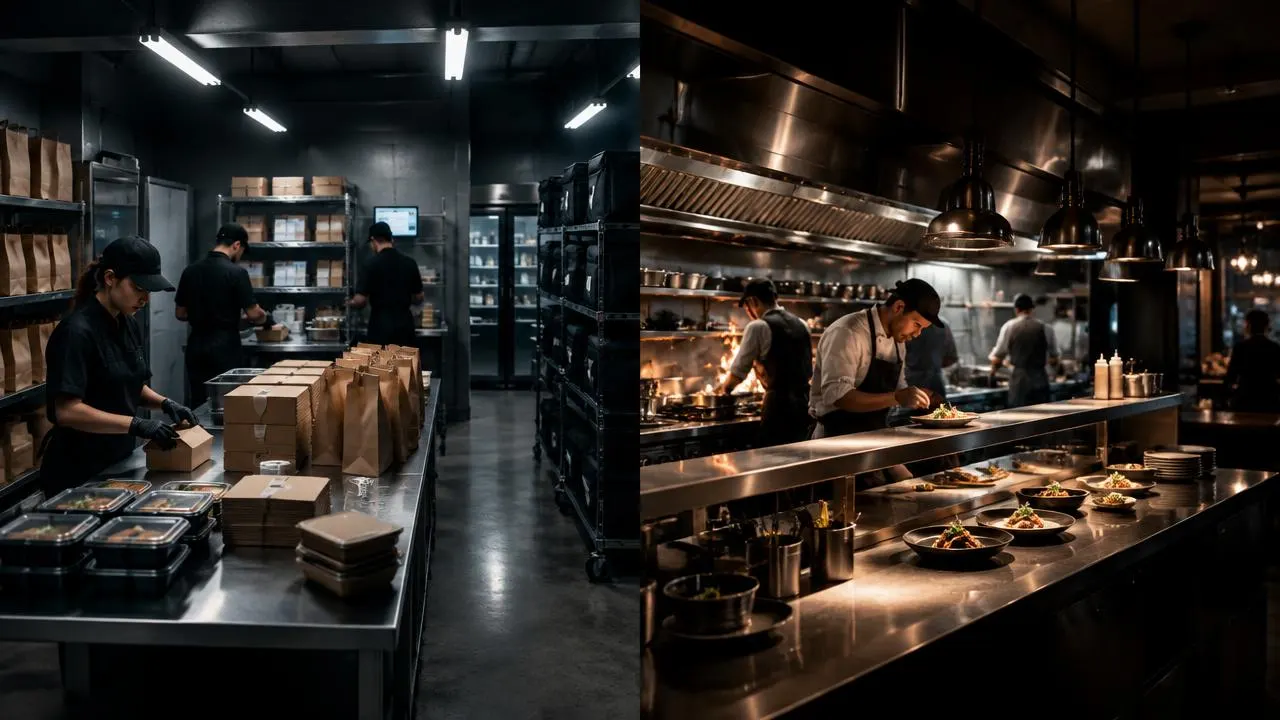
Choose a cloud kitchen if your business is built on delivery, a focused menu and lower space needs. Choose a restaurant if dining experience, walk in customers and presentation are central. The kitchens differ mainly in layout and finishing: cloud kitchens are built around packing and dispatch, restaurants around plating, the pass and guest service.
Key facts
- A cloud kitchen is built around delivery and packing, while a restaurant kitchen is built around plating and the pass.
- Cloud kitchens usually need less space but must handle sharp delivery peaks.
- Restaurants need front of house areas, guest facilities and more presentation focused equipment.
- Both need proper ventilation, hygiene and food safety compliance.
Start with the business model
The kitchen should follow the business, not the other way round. Ask where your customers will come from, how they will eat the food and how much of the experience depends on the space. A brand that lives on delivery apps does not need a dining room. A brand built on atmosphere and service does.
How the kitchens differ
Space and location
Cloud kitchens can sit in lower footfall, lower rent locations, since customers never visit. They usually need less floor area. Restaurants need visible, accessible locations and space for dining, washrooms and storage.
Layout
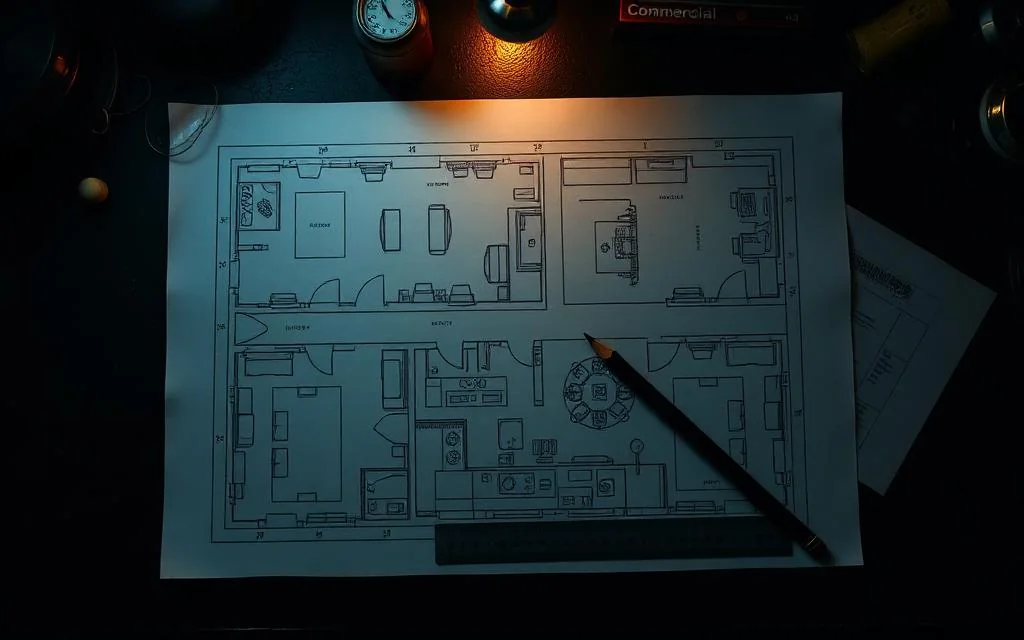
A cloud kitchen flows from storage to prep, cooking, packing and dispatch, with the exit close to the packing counter. A restaurant flows from storage to prep, cooking and plating to a pass, with a separate return route for used dishes.
Equipment focus
- Cloud kitchen: packing counters, heat lamps or holding for orders, shelving for packaging and dispatch racks.
- Restaurant: plating counters, pass with heat lamps, service stations, dishwashing sized for crockery and often display or live counters.
Menu and volume
Cloud kitchens often run focused menus, sometimes with several brands. Restaurants may run broader menus with more complex plating. Both must size cooking equipment for the busiest hour.
What stays the same
Both kitchens need correct ventilation, safe gas or electrical installation, food safety compliance, separation of raw and cooked food, cleanable surfaces and pest control. A cloud kitchen is not a lighter standard because customers do not see it.
Ventilation and neighbours
Cloud kitchens are often in mixed use or residential areas where smoke and odour cause complaints. Plan exhaust discharge carefully. Restaurants in malls or high streets may face building rules on ducting routes. In both cases, plan the exhaust before signing the lease.
Cost and timeline factors
A cloud kitchen usually involves less interior work and can open sooner, since there is no dining room to design and furnish. A restaurant involves more interior, front of house and guest facility work. Kitchen equipment itself is driven by the menu and volume in both cases.
Hybrid options
Some businesses start as a cloud kitchen and add a small takeaway counter, or open a restaurant that also serves delivery. If you plan to grow into a hybrid, leave space and utility capacity for it from the start.
For a restaurant focused plan, our guide on restaurant kitchen planning in Bangalore covers layout and equipment. For delivery, our article on cloud kitchen pods shows how compact a kitchen can be.
Steelkraft manufactures heavy duty cooking ranges and hot cases and serving counters for both models in grade 304 stainless steel, fabricated in-house. For local projects, see our pages on restaurant kitchen equipment manufacturers in Bangalore and cloud kitchen equipment in India.
Questions to help you decide
- Will most of your revenue come from delivery apps or from guests visiting?
- Does your food travel well in packaging, or is it best eaten immediately?
- How important is ambience to your brand?
- Can you find a location with good delivery coverage at a sensible rent?
- Do you plan to run more than one brand from the same kitchen?
If your answers point mainly to delivery, a cloud kitchen is often the simpler start. If they point to experience and presentation, a restaurant fits better.
Common mistakes
One mistake is opening a cloud kitchen with a menu that does not travel well. Crisp, delicate or plated dishes can arrive soggy or broken. Another is opening a restaurant and treating delivery as an afterthought, so packing happens on the pass and slows dine in service. If both channels matter, give packing its own space from day one.
A third mistake is under planning ventilation in a cloud kitchen because it is hidden from customers. Neighbours and staff still notice.
Equipment you can reuse
Much of the core kitchen equipment is the same in both models: cooking ranges, refrigeration, preparation tables, sinks and exhaust. If you start with a cloud kitchen and later open a restaurant, a good part of the equipment design can be reused or repeated. Equipment built to standard sizes in grade 304 stainless steel is easier to move and refit. The parts that differ, such as the pass, service stations and dining room equipment, can be added when the restaurant opens. Planning with this in mind protects your investment whichever path you take first.
Frequently asked questions
Does a cloud kitchen need less equipment than a restaurant?
It usually needs fewer front of house and plating items, but cooking, refrigeration and exhaust are sized by menu and volume. A busy cloud kitchen can need as much cooking capacity as a restaurant.
Do cloud kitchens need FSSAI registration or a licence?
Yes. Cloud kitchens are food businesses and need the appropriate FSSAI registration or licence, along with any local permissions.
Can a cloud kitchen later become a restaurant?
It can, but it often needs a different location and front of house space. Planning a hybrid model from the start makes the change easier.
If you are weighing up the two models, ask Steelkraft to review your plan.