New vs Used Commercial Kitchen Equipment: What to Buy
By Vishwa MenonPublished Updated
Who this is forThis guide is for restaurant, cafe and cloud kitchen owners weighing second-hand equipment against new to save on a fit-out budget.
Buy used only where a fault is visible and harmless: plain stainless steel tables, racks, shelves and trolleys. Buy new wherever a hidden fault can hurt someone or spoil food, which means anything that burns gas and anything that keeps food cold. Whatever you buy second-hand, check the steel grade, the welds and the frame before you look at the price.
Key facts
- Plain stainless steel furniture such as tables, racks and shelves is the safest category to buy used, provided it is grade 304 and structurally sound.
- Gas equipment and refrigeration should be bought new, because hidden faults in gas trains or cooling systems carry safety and food risks.
- Check the steel grade before price: grade 202 corrodes in wet, salty kitchens where grade 304 holds up.
- Used equipment rarely comes with a written manufacturer warranty or a service team, so budget for repairs.
A used piece can look like a bargain on the listing and cost more within a year. This guide sorts kitchen equipment into what is reasonable to buy used and what is not, then gives you a checklist to take along when you inspect.
What commercial kitchen equipment is safe to buy used?
The safest used purchases are pieces with no moving parts, no gas and no cooling circuit. Their condition is on the surface, so you can judge it by eye and by hand.
- Work tables and undershelves, if the top is flat and the legs are braced and level.
- Storage racks, wall shelves and pot racks, if the frame does not flex under load.
- Trolleys and GN pan trolleys, if the wheels turn freely and the welds are whole.
- Sinks, if the bowls are not pitted and the joints do not leak when filled.
Even here, the grade matters more than the price. Grade 304 stainless steel has about 18 percent chromium and 8 percent nickel and resists the water, salt, acidic food and cleaning chemicals of a working kitchen. Grade 202 swaps much of the nickel for manganese and costs less, but it rusts in hot, wet, salty conditions. A cheap used table in 202 can stain and pit at the sink end within months.
Which equipment should you never buy used?
Two groups belong on the new list: gas equipment and refrigeration. In both, the faults that matter are inside, where a short viewing will not find them.
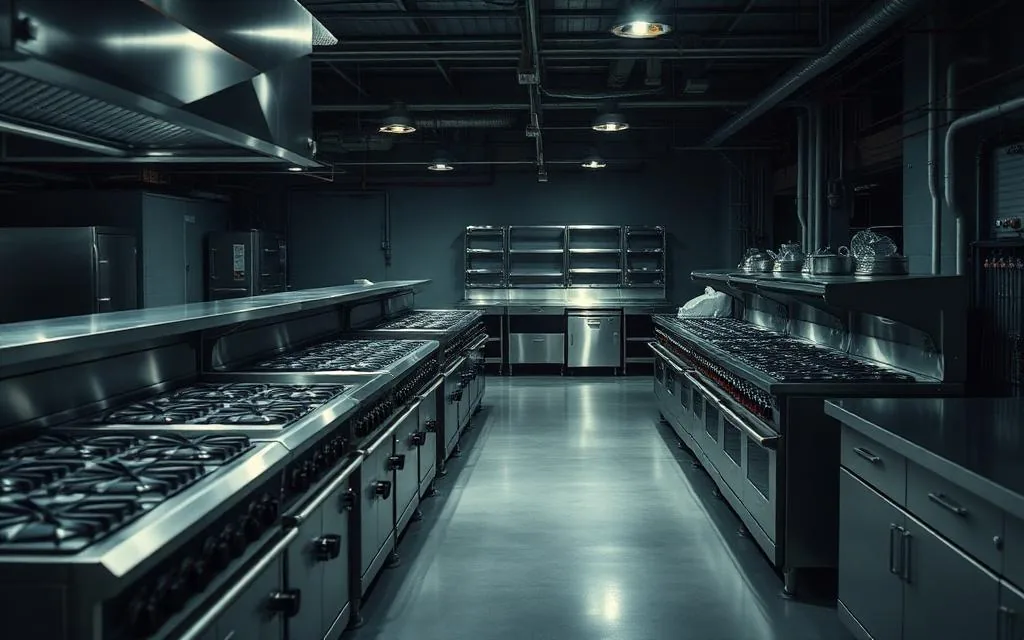
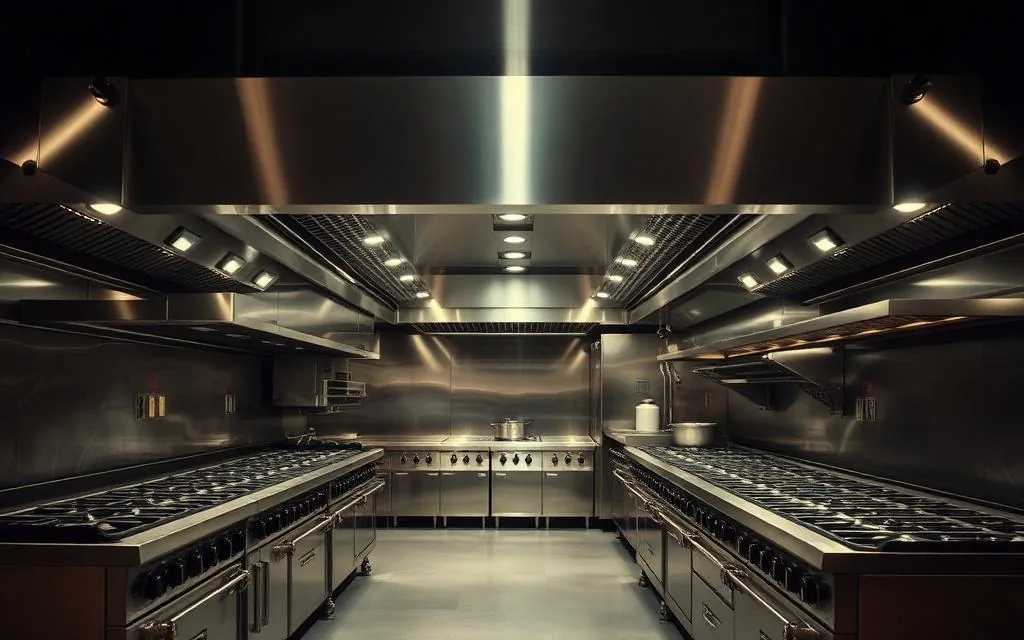
Gas equipment means ranges, Chinese ranges, tandoors, bulk cookers, boiling pans and the gas bank feeding them. On new equipment we leak-test the gas train and fit regulators, gauges and safety valves. On a used range you rarely know what has been changed, how the burners were treated or whether the valves still seal. A leak is a fire risk for your whole team, so this is not a place to save money.
Refrigeration means walk-in cold rooms, under-counter refrigerators, display chillers and freezers. A cold room depends on its insulation panels and door gaskets to hold temperature. Worn gaskets and tired compressors let temperatures drift, and drifting temperatures spoil stock and fail inspections. A used unit may also run harder, so any saving on the price can come back on the power bill.
Dishwashers sit in between. Their pumps, heaters and rinse cycles do the sanitising, and you cannot see their condition. If you consider a used one, ask for a test run at full temperature and assume you will need a service soon.
Used kitchen equipment inspection checklist
Take this list with you. If the seller will not let you check a point, treat that as a no.
- Steel grade: ask for it in writing, and be wary when nobody can say whether it is 304 or 202.
- Rust and pitting: look closely at sink corners, table edges and the underside of shelves, where water sits.
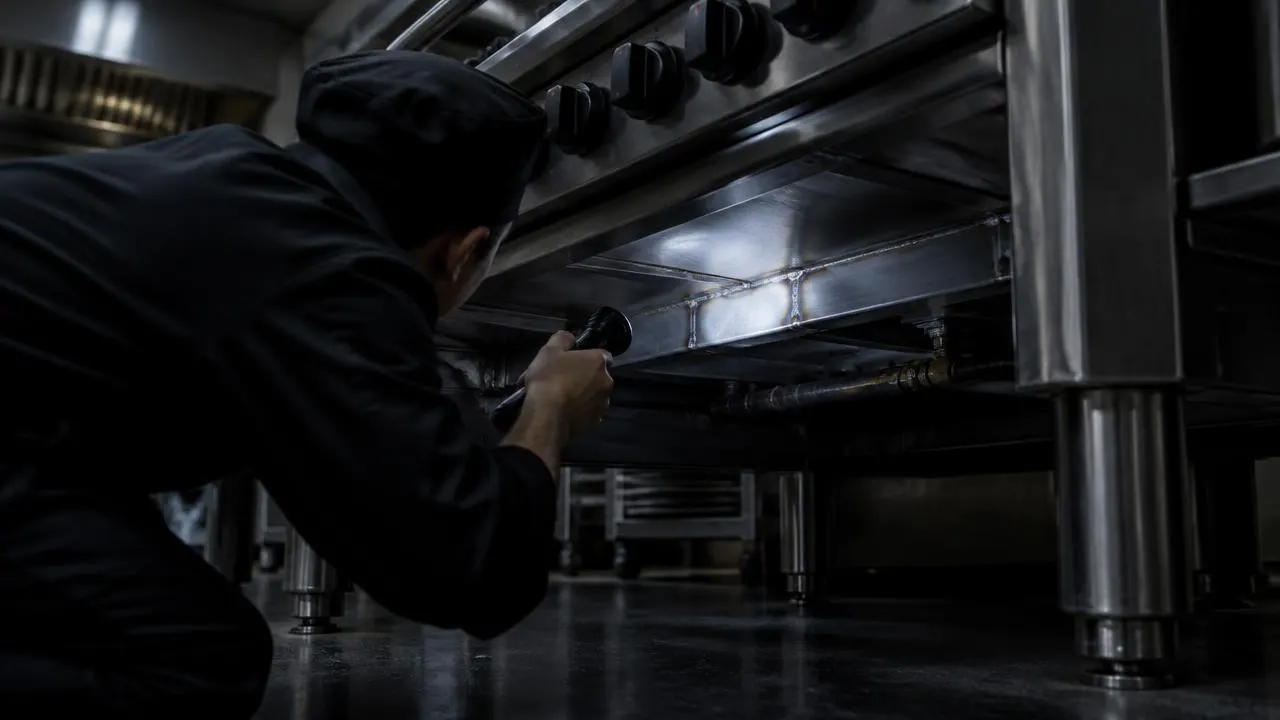
- Welds: they should be continuous and smooth, not cracked, patched or spot-welded with gaps that trap grease.
- Corners: coved corners rinse clean, while sharp internal corners collect food and are harder to sanitise.
- Frame: press on the top and shelves; a braced frame should not sag or wobble when loaded.
- Sheet thickness: thin sheet dents and drums, so compare it with the 1.2 to 1.6 mm structural range we build to.
- Fit: measure your space, drains and service points first, because a used piece will not be made to your dimensions.
New vs used: what do you give up?
The price tag is only part of the comparison. New equipment from a manufacturer comes with a warranty in writing and, in our case, our own service team within 48 hours. Used equipment usually comes as seen, with no warranty and nobody to call when it fails during a dinner service.
New equipment is also built to your layout. We size tables, sinks and racks to your floor, your drainage points and your team, so the flow from delivery to cooking stays tight. A used piece forces the kitchen to fit the equipment instead.
Hygiene is the last point. FSSAI expects food contact surfaces to be food-grade stainless steel with smooth, sealed joints. A worn or patched used surface can be harder to keep clean, and an inspector will notice.
How do you budget for a mix of new and used equipment?
A sensible mix spends new money on the parts that carry risk and saves on the plain steel. Put gas equipment, refrigeration and extraction on the new list. Consider used for back-up storage racks, extra trolleys and secondary prep tables, once each one passes the checklist.
For a sense of scale, our cost guide puts a cloud kitchen at 5 to 15 lakh rupees for equipment and a restaurant kitchen at 15 to 50 lakh rupees. Cooking equipment is usually the largest share, which is exactly the group you should buy new. The savings from used furniture are real but smaller than they first look.
Should you buy new or used commercial kitchen equipment?
Buy plain grade 304 steel furniture used if it passes a careful inspection and fits your space. Buy anything with gas, cooling or a sanitising cycle new, from a maker who will stand behind it. Steelkraft does not run a buy-back or refurbishment scheme, so if you are weighing used against new, compare the full cost of each, including warranty and service, before you decide.
Start the new list with gas ranges and burners built and fire-tested in our factory, and see how we equip a complete restaurant kitchen. To put numbers on the choice, the equipment price list gathers every range we publish.