LPG manifold systems: safety and layout basics
Who this is forThis guide is for restaurant, hotel and canteen owners using LPG who want to understand how a manifold system should be planned and maintained.
An LPG manifold system connects a bank of cylinders to a single fixed pipeline that feeds the kitchen's gas appliances. For safety, keep the cylinder bank outside the kitchen in a ventilated enclosure, use proper regulators and isolation valves, fit leak detection, and have the system installed and checked by a qualified gas installer.
Key facts
- An LPG manifold connects several cylinders to one pipeline so the kitchen draws gas from a single, controlled supply.
- Cylinders should be kept outside the kitchen in a ventilated, protected and accessible location.
- Isolation valves, regulators and leak detection are core parts of a safe installation.
- LPG installations must follow applicable rules and be installed and inspected by qualified people.
What a manifold system does
In small kitchens, individual cylinders sit next to burners. That becomes unsafe and unworkable as the kitchen grows. A manifold system moves the cylinders to one controlled location and delivers gas through fixed pipework. It also allows cylinders to be changed over without stopping cooking, since one bank can supply while the other is replaced.
Main parts of the system
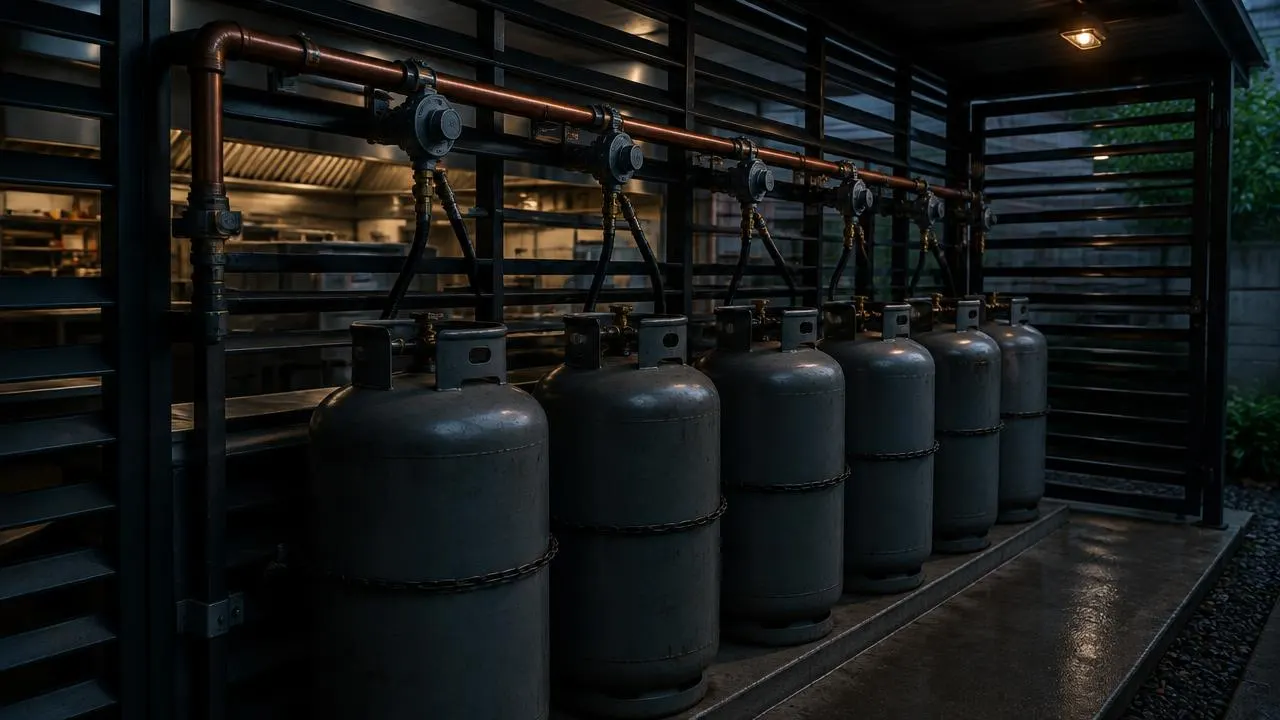
- Cylinder bank: the group of LPG cylinders, usually split into a working side and a standby side.
- Manifold and changeover: the header that connects the cylinders and switches between banks.
- Regulators: reduce cylinder pressure to the level the pipeline and appliances need.
- Fixed pipeline: correctly specified pipe running from the bank to the kitchen.
- Isolation valves: a main valve and a valve at each appliance so any point can be shut off.
- Leak detection: gas sensors linked to an alarm and, ideally, an automatic shut off valve.
Where to locate the cylinder bank
The cylinder bank should be outside the building or in a dedicated, well ventilated enclosure that opens to the outside. LPG is heavier than air, so it collects at low level if it leaks. The location should therefore avoid basements, drains, pits and enclosed spaces where gas can pool.
Other practical points matter too. The bank should be protected from direct sun, rain and tampering, and it should be easy for cylinder delivery without carrying cylinders through the kitchen or dining area. Keep it away from sources of ignition and electrical equipment that is not suitable for that area.
Laying out the pipework
Keep routes simple
Run the pipeline by the shortest practical route, fixed securely and visible where possible so it can be inspected. Avoid running gas pipes through concealed spaces where a leak would go unnoticed.
Label and separate
Label gas lines clearly and keep them apart from electrical cables. This makes maintenance safer and helps staff find the right valve quickly in an emergency.
Connect appliances properly
Each appliance should have its own isolation valve within easy reach, and flexible connections should be of the correct type and length. Long or damaged rubber hoses are a common hazard in older kitchens.
Leak detection and emergency shut off
Gas sensors should be placed at low level near appliances and the cylinder area, since LPG sinks. Link them to an audible alarm and, where possible, an automatic solenoid valve that shuts off the supply. Staff should know where the main isolation valve is and practise closing it.
Ventilation in the kitchen
Burners consume air and produce heat and combustion products. A correctly sized exhaust hood and a fresh air supply keep the kitchen safe and comfortable. See our commercial exhaust and ventilation systems, and read our guide on choosing an exhaust hood for sizing basics.
Rules and approvals
LPG storage and installations in India are subject to rules on storage quantities, locations and safety, and local fire authorities may have their own requirements. The applicable rules depend on the quantity stored and the type of premises. Use a qualified, authorised gas installer and check with your local authority before installation, rather than relying on general guidance.
Maintenance checks
- Daily: staff check for gas smell and close appliance valves at the end of service.
- Regularly: inspect hoses, connections and regulators for wear or damage.
- Periodically: have the whole system leak tested and serviced by a qualified installer.
- Always: replace damaged parts immediately rather than repairing them temporarily.
Steelkraft manufactures gas burners and gas cooking ranges and cooking equipment in grade 304 stainless steel, designed for connection to a manifold supply. For local projects, see our pages on canteen kitchen equipment in Bangalore and commercial kitchen equipment in Mumbai.
Planning for growth
Kitchens often add burners, a tandoor or a second cooking line after opening. If the manifold and pipeline were sized only for the first day's equipment, adding appliances can cause low pressure at the burners, weak flames and slow cooking. When planning the system, tell the gas installer about likely future equipment so the pipe size, regulators and cylinder bank can allow for it.
Staff awareness
A safe installation still depends on the people using it. Every staff member should know what gas smells like, where the main isolation valve is, what to do if the leak alarm sounds and why they must never use a flame or switch electrical equipment on or off when gas is smelt. Put clear instructions near the cylinder bank and in the kitchen, and repeat the training when new staff join.
Frequently asked questions
Can LPG cylinders be kept inside a commercial kitchen?
For anything beyond very small setups, cylinders should be kept outside the kitchen in a ventilated, protected bank connected through a manifold. Check local rules for the quantity you plan to store.
What is the purpose of a changeover in a manifold?
A changeover lets the kitchen draw from one bank of cylinders while the other is replaced. This keeps gas flowing during service and avoids changing cylinders in a hurry.
How often should an LPG manifold be inspected?
Staff should do simple daily checks, and a qualified gas installer should test and service the system at regular intervals. Follow the installer's recommendation and any local requirements.
If you are planning a gas cooking line and want it built to suit your manifold system, get in touch with our team.